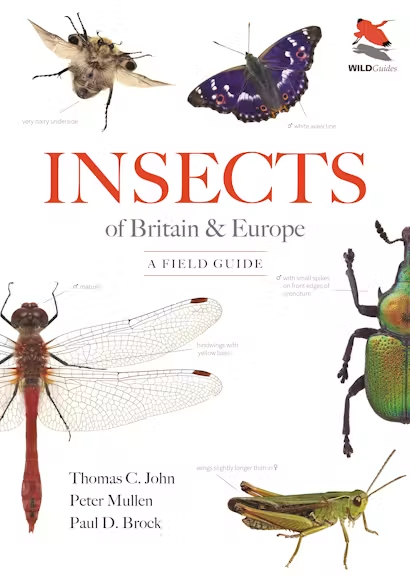
This book was published last week and I’ve been giving it a close look. It does what you’d expect from its title and cover – it’s a photographic identification guide to lots and lots of insects (and a very few non-insect arthropods sneak in at pages 22-23 and 639 and following).
The 3,000 species are a selection of c25,000 UK and 105,000 European species, and lean strongly towards UK species, attractive species and easily identified ones. This is what many potential purchasers of the book will want and need.
Covering more than 3,000 species in say, 600 main pages, means that there are about five species per page except half the pages are text, maps and diagrams so we’re looking at about 10 species images on about 300 pages – that works very well. The images, mostly on the right hand pages, are clear and uncluttered, and of a good size for the key identification features to show well. The images are not labelled with species names but with a number which relates to the species account on the facing left hand page. This reduces clutter and has the added (minor) advantage that you can see whether you recognise the species and check by looking at the accompanying page.
On each left hand page is the text to go with the species illustrated and this contains distribution maps, an indication of when the species is active through the year, its dimensions, habitat occupied and identification pointers and hints. By necessity these accounts are meagre, but they are useful and are already in a very small font so there was no scope for expansion without making a big book even weightier. The distribution maps were eye-opening for me. Whereas it is generally, in broad terms, true to imagine most UK insect distributions to be ‘commoner in the south-east and getting rarer towards the north and west’ that doesn’t tell me anything about where any species can also be found across Europe but these pages do. I was fascinated by many of the European distributions of species I’ve seen in my garden – I couldn’t have guessed where Orange-tailed Clearwing, Common Green Lacewing or Field Damsel Bug are also found, and now I know.
I have a feeling that I will use the long winter evenings to dip into this guide and prepare myself for the insects to come next spring. It looks like a great resource and it is a pleasure to browse although whether such a weighty tome will often get carried out into the field is another question.
The cover? It very well sums up what you will find in the 680 pages of this guide and it’s clean and clear. I’d give it 8/10.
Insects of Britain and Europe: a field guide by Thomas C. John, Peter Mullen and Paul D. Brock is published by Princeton University Press.
[registration_form]