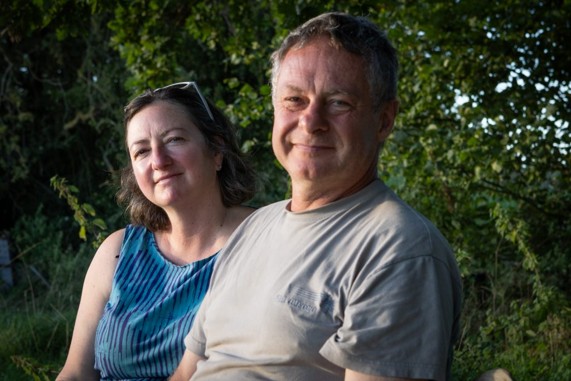
David Wolfe is a barrister who, with his brother, inherited a farm, a rather special farm called Wakelyns, that his parents, particularly his father who was an agricultural researcher, had set up in the cereal prairielands of East Anglia. David and Amanda took over the management of the farm in 2020 but now David’s brother needs to take out his share of the value of Wakelyns and that means either selling the whole farm and, almost certainly, losing such an influential example of how agroforestry can work or, the route that David is pursuing, setting up a Charitable Community Benefit Society to take the project forward. Here he explains what Wakelyns is and how you can help.
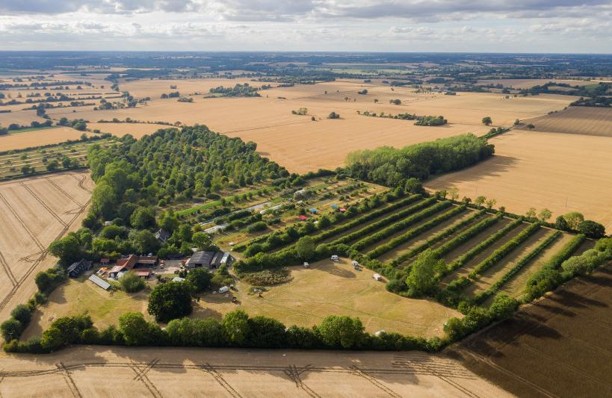
My parents bought Wakelyns in Suffolk in 1992. A pig farm in the 1970s, with pens designed so the manure flowed straight into the ditch. By the 1990s, its 50 acres of fields (hedges almost entirely removed) were being farmed in the petro-chemical intensive manner which had come to characterise East Anglian farming in the recent decades. Nature had largely been removed.
My dad had been an agricultural scientist working in the UK and then Switzerland. His work had focussed on maintaining disease resistance in Barley with reduced input of manufactured chemicals, but his creativity was constrained by the discipline of being in the public sector. Wakelyns was to be something of a ‘retirement project’ for the two of them – it would allow him to innovate further through their own project.
That project was to bring together organic farming with ‘agroforestry’. Agroforestry – combining in-field trees with other forms of agriculture – is common in some parts of the world. But, much less so in Europe and certainly the UK, other than some traditional forms, like some domesticated ‘pannage’ (pigs in orchards) and occasional specific planting (such as poplars to make matches).
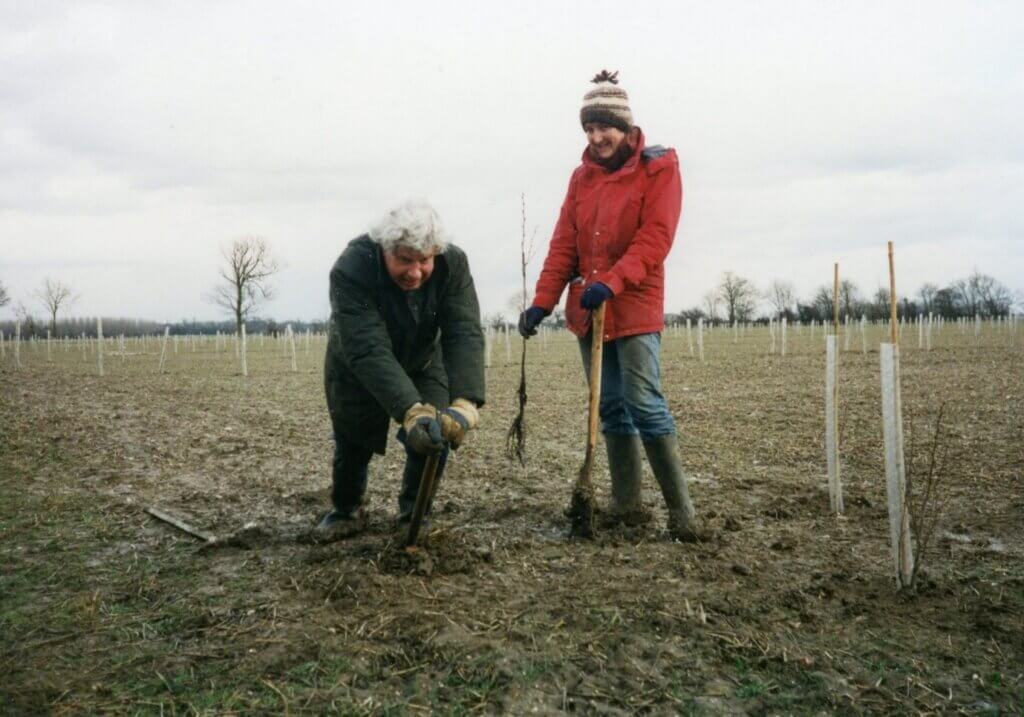
Establishing agroforestry at Wakelyns from 1994 was pioneering, particularly as my parents set about planting different areas of agroforestry, very much as a trial/demonstration site and not just a single field with one type of tree. When we planted the first ‘hardwood’ whips (I was part of it) in March 1994 into last year’s stubble, we were regarded as having ruined a perfectly good wheat field. Over the next few years, separate agroforestry areas were planted, characterised by different tree mixes for different purposes and at different spacing.
The agroforestry design is ‘alley cropping’, with permaculture inspired organic growing in between: lines of trees running North-South (for maximum sunshine in the alleys). One field comprises double lines of hazels, since managed by cyclical coppicing to produce stakes for hedge laying, the next lines containing a huge diversity of fruit trees, the next timber trees, and so on (six areas in all). In the alleys in between, my parents established an organic rotation system, growing cereals (including the YQ population wheat my dad developed with scientists from the Organic Research Centre and John Innes Centre), vegetables and, later (in conjunction with Hodmedods) lentils – then novel in the UK.
With the wide field margins, the trees, encouragement of the remaining mature hedges, annual herbal leys and (of course) the absence of herbicides and pesticides, nature began to return. An RSPB survey from 2010 (apparently Mark’s initiative when he was at RSPB) at least recorded one Turtle Dove territory – the start of a local recovery from decades of population loss through destructive farming practices.
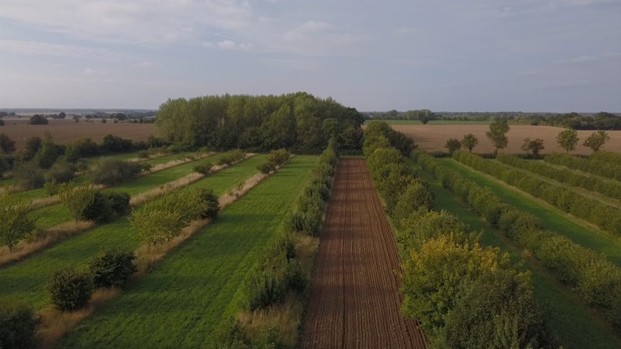
Wakelyns also became a destination for land managers from around the UK and beyond, interested in seeing agroforestry in action, and perhaps then trying it for themselves. Many, perhaps most, of the agroforestry innovation over the following years was inspired by visits to Wakelyns, with commercial scale planting based on one or more of the demonstration areas at Wakelyns gradually appearing at a few tens of sites in the UK in the following years – whether to provide shade for livestock, stop soil erosion, or more; ideas blossomed. But, of course, a few tens of agroforestry sites is still a tiny minority of farms.
My mum died in 2016, my dad in 2019. My brother and I took on ownership (more of that below) and my wife Amanda and I took on the operations from 2020. We quickly realised that my parents had not designed or implemented Wakelyns to be operationally (let alone financially) sustainable: although an oasis in the agri-business desert, it was still a science project. So, changes were needed.
The only concern of most land managers in the area is their yield of a commodity product such as wheat, sugar beet or oil seed rape (or perhaps profit, though agriculture of that kind generally loses money). But for us, Wakelyns is a political project: a different way of land use aiming to maximise the productivity of our 23 hectares in a way those others would not contemplate. We want to produce high-quality delicious food direct from the farm, we want to maximise the sequestration of carbon, celebrate the number of people living and working at Wakelyns, encourage visitors, education and learning including through community events (such as our annual ‘Dal Festival’); and host research. And, of course, we want to farm to support, not fight against, nature.
Wakelyns is not a re-wilding project – that is something different. But our tree lines have become linear re-wilding, and our trees and hedges now host an abundance of species. Three Turtle Dove territories (and babies seen this year) have become our annual norm. Deer, Brown Hares, birds all co-exist happily with our farming.
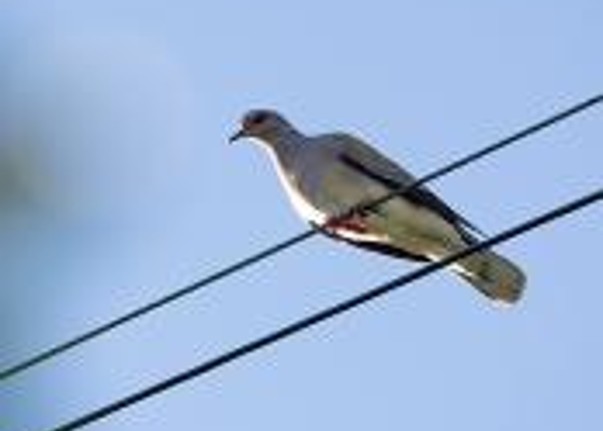
The tree produce (such as the hazel sticks for hedge laying) continues, but we no longer try and sell wheat, or apples, or even lentils; that is not sustainable (let alone commercially so) on our scale and given the unwillingness of the UK market properly to recognise the value and cost of production of high quality organic produce grown in a sustainable nature-friendly way. Instead, we promote ‘short food chains’ delivered through ‘enterprise stacking’. Short food chains means that what Wakelyns produces (and sells on site or locally) is – for example – delicious sourdough bread, or apple juice, or dal (together: wellbeing), not the raw elements. Stacked enterprises means that the people baking the bread, or making the juice are the separate businesses which we host.
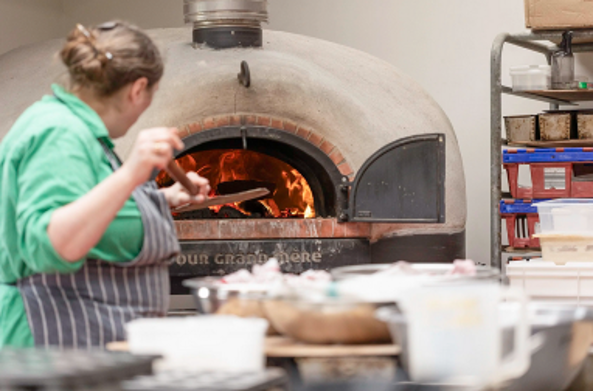
Those businesses are all in some way connected to the land – through growing, through food, through nature, through craft, through public enjoyment, and more. For this blog, I would draw particular attention to ‘Wakelyns Nature’ with Harry Read, accomplished nature photographer, leading dawn chorus guided walks, helping share the joy of what Wakelyns has become.
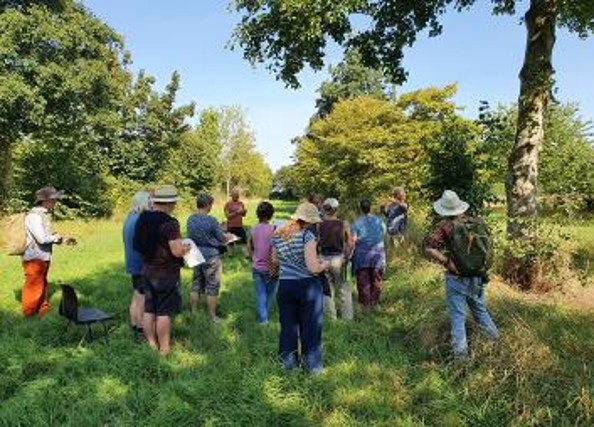
Meanwhile, agroforestry is coming of age. What was seen by the first movers as helping farmers farm better, is now at the forefront of helping to tackle the climate crisis. Since 2023, it has been UK Government policy (as part of the statutory Net Zero strategy) that 10% of UK arable land should be agroforestry by 2050. To help that happen, Environmental Land Management subsidies will start from later this year: £5 for each woodland tree planted, £15 for each fruit tree, and then up to £849/hectare each year for 10 years to support their management and establishment as agroforestry. With the old flat-rate ‘basic payment’ (which peaked at about £230/hectare in 2021) now gone, that could be powerful driver to support that 10% target. So, we can finally look forward to more ‘trees in fields’, and with them more habitat and more carbon sequestration. It is potentially a big change in the landscape.
And what of Wakelyns? Amanda and I want to ensure that the project can continue beyond the point where we are able to make it happen. Fourteen friends of Wakelyns have set up the Wakelyns Charitable Community Benefit Society, a charity, to take over on a phased basis over the next few years. To make that happen, the WCCBS needs to raise £1.2m. If it can do that, it can buy out my brother’s share. I will then match that by gifting my share.
Amanda and I will step back gradually. But, if the WCCBS cannot reach the target, then we will need to put most or all of Wakelyns on the open market as my brother wants to realise his share one way or another. A decision needs to be made in the next few months. The fundraising campaign was launched in July with a lovely article in the Guardian. Since then, we’ve featured in Wicked Leeks and the Farm Gate podcast (25 August). Permaculture Magazine will follow shortly.
There’s lots of information about Wakelyns at www.wakelyns.co.uk, and about WCCBS at www.wakelyns.co.uk/ccbs/. Links there allow you to make a donation or buy shares in WCCBS to support the fundraising. Over 700 people, including Mark, have already signed up with around £300k raised so far but we need even more. Can you help us please – have a look here. Thank you!
If you still need persuading have a look at this lovely short film made for us by Peter Clitheroe (including interviews with Chris Packham and Sheila Das, Head of Gardens at the National Trust).
And whatever else happens, please come and visit next year (particularly if that might be the last year before Wakelyns is privately sold and lost as a public-facing resource).
Mark writes: I’ve been to Wakelyns several times, with Chris and Ruth as Wild Justice and as me subsequently. Most of the Turtle Doves I’ve seen and heard in the UK in the past decade have been at Wakelyns. Waking up to the sound of purring Turtle Doves is now such a rare experience. And there’s all this cutting edge agroforestry going on too (and Barn Owls – it’s great for Barn Owls) so of course I signed up to buy shares in Wakelyns through the CCBS. That means I’ve pledged £114 to the project but that money is only taken if enough money is raised to rescue Wakelyns. If enough other people chip in their pledges then it will have cost me £114 (and I added a small donation) but I will know that Wakelyins has been saved. If enough money isn’t forthcoming then I won’t get charged but I’ll feel sad at the loss of Wakelyns in the Suffolk countryside, and probably the loss of its Turtle Doves and Barn Owls. I’d much rather see the money go to Wakelyns and its wildlife.
[registration_form]