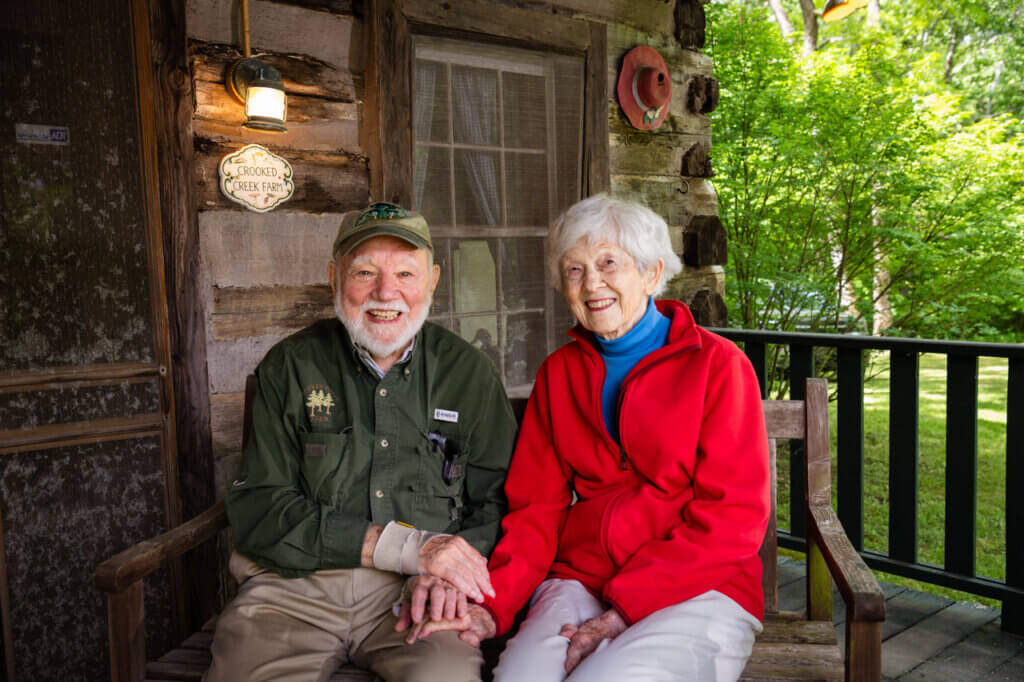
Dr. James “Greg” Kuhns of Louisville has been selected as the recipient of the 2026 Kentucky Leopold Conservation Award®.
The award honors farmers and forestland owners who go above and beyond in the management of soil health, water quality, and wildlife habitat on working land.
Dr. Kuhns, who owns forest and farmland in Bullitt County, was presented with the award at the Kentucky Association of Conservation Districts’ Annual Convention on July 28. He receives $10,000 for being selected.
Sand County Foundation and national sponsor American Farmland Trust will present Leopold Conservation Awards to landowners in 28 states this year. In Kentucky, the award is presented annually with the Kentucky Agricultural Council, and the Kentucky Association of Conservation Districts.
Given in honor of renowned conservationist Aldo Leopold, the awards recognize farmers, ranchers, and forestland owners who inspire others with their dedication to environmental improvement. In his influential 1949 book, A Sand County Almanac, Leopold advocated for “a land ethic,” an ethical relationship between people and the land they own and manage.
Kentucky landowners were encouraged to apply, or be nominated, for the award this year. Applications were evaluated by an independent panel of agricultural and conservation leaders from Kentucky. Among the many outstanding landowners nominated for the award were finalists James Benton of Campbell County, and Shane and Felicia Wells of Butler County.
ABOUT DR. JAMES “GREG” KUHNS
A land ethic was instilled in Dr. James “Greg” Kuhns from an early age.
He grew up in a family where conservation was taken seriously and frequently discussed. While working on his family’s farm and camping in its forests in his youth, he was further influenced by the Boy Scout’s ethics of conservation.
When Greg and his sister, Anne Van der Steur, inherited the cattle, hog, and tobacco farm their grandfather established in the 1890s, they were concerned about encroaching development, the health effects of tobacco, and environmental impacts of swine production. The siblings shared a moral obligation to steward the farm’s forests and to prevent water pollution from soil erosion.
Located among the steep slopes of Kentucky’s Knobs Region, where flooding is common, they phased out of hog production. They also shifted their farm’s focus from tobacco to timber stand improvement and prioritized improving their beef cattle herd’s genetics.
They sought the guidance and partnership of many experts to sustain the health of their land and the farm’s productivity. Greg joined organizations focused on agronomy, land, water, and timber management, including the Kentucky Woodland Owners Association Kentucky Natural Lands Trust, and Kentucky Conservation Committee.
Greg follows the best practices outlined in the Kentucky Forest Conservation Act and the federal Environmental Quality Incentives Program (EQIP). He reseeded logging trails, and a Master Logger is present during harvest. Forest pools have been created for wildlife.
As a volunteer sampler of the Salt River Watershed Watch, Greg helped discover an e-coli contamination through bacteria sampling in Crooked Creek. As a result, he refenced his pastures to contain cattle from the creek.
Elsewhere on the farm, he’s initiated practices to suppress invasive plant species like Autumn olive and Honeysuckle vine. Riparian buffers have been preserved and expanded to prevent erosion, improve water quality and provide wildlife habitat. Milkweed patches provide breeding sites and way stations for the endangered Monarch butterfly. Prescribed burning prepare fields of forbs and wildflowers for other beneficial pollinators.
As rapid development in Bullitt County caused widespread loss of natural land and resources, the Kuhns pursued a way to preserve some of their farm’s natural lands in perpetuity. Greg believed that converting some of their land to public ownership would be the best solution.
From this came the formation of the Knobs State Forest, established in 2006 with a 1,100-acre tract and expanded in 2018 with another 498 acres. Greg and his wife Joan sold another 700 acres of forestland to the Lincoln Heritage Boy Scouts Council to form Camp Crooked Creek.
Kuhns’ farm and Knobs State Forest are the origins of the Crooked Creek wildlife corridor that passes under Interstate 65, where motion-activated cameras have documented many species traversing a wildlife tunnel. These areas make up the eastern portion of a wildlife corridor that connects to the large natural land tract of the Fort Knox reservation.
With the support of his local historical society and county government, Greg is in the process of creating a historical park around a stone furnace that burned charcoal fuel to smelt iron ore in the 1800s.
Greg was named the Kentucky Tree Farmer of the Year in 2000 by the American Tree Farm Association. Such accolades arise from Greg’s innate desire to embrace ethical farming and forestry practices, preserve natural landscapes, and to benefit the public with access to forested areas.
ACCOLADES
“The Kentucky Agricultural Council is proud to once again partner in recognizing the exceptional stewardship and conservation work demonstrated by Dr. James Kuhns,” said Tod Griffin, Kentucky Agricultural Council Chairman. “The winner of the 2026 Leopold Conservation Award represents a lifetime of work to promoting good stewardship in his woodland and farming operations; his is a true conservationist.”
“Kentucky’s 121 conservation districts promote the sound management of all our natural resources, and we are excited to join in recognizing the well-deserving Dr. James Kuhns,” said Ted Jessup, Kentucky Association of Conservation Districts President. “This year’s Kentucky Leopold Conservation Award recipient is truly a steward of the land, and his dedication to conservation is an inspiration to us all.”
“These award recipients are examples of how Aldo Leopold’s land ethic is alive and well today,” said Kevin McAleese, Sand County Foundation President and CEO. “Their dedication to conservation is both an inspiration to their peers as well as a reminder to all how important thoughtful agriculture is to clean water, healthy soil, and wildlife habitat.”
“As the national sponsor for Sand County Foundation’s Leopold Conservation Award, American Farmland Trust celebrates the hard work and dedication of the award recipients,” said John Piotti, AFT President and CEO. “At AFT we believe that exemplary conservation involves the land itself, the practices employed on the land, and the people who steward it. This award recognizes the integral role of all three.”
Sand County Foundation’s Leopold Conservation Award is made possible thanks to the generous support and partnership of American Farmland Trust, Kentucky Agricultural Council, Kentucky Association of Conservation Districts, Kentucky Farm Bureau Federation, U.S Department of Agriculture’s Natural Resources Conservation Service, AgriBusiness Association of Kentucky, Farm Credit Mid-America, Kentucky Cattlemen’s Association, Kentucky Corn Growers Association, Kentucky Department of Agriculture, Kentucky Department of Fish and Wildlife Resources, Kentucky Pork Producers, Kentucky Soybean Promotion Board, Kentucky Tree Farm Committee, and Kentucky Woodland Owner’s Association.
For more information on the award, visit www.leopoldconservationaward.org.
[registration_form]