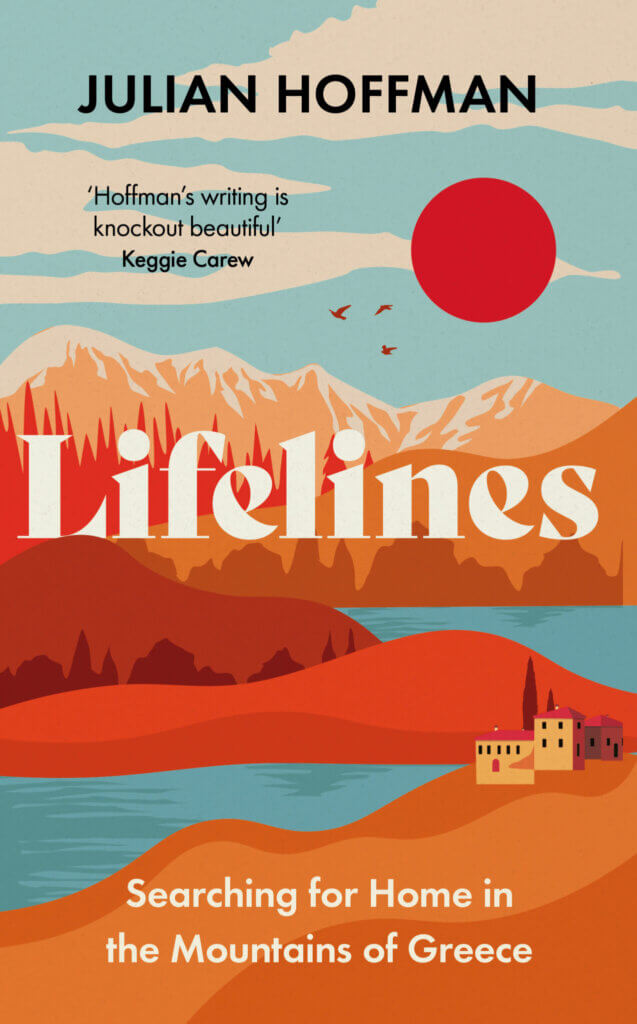
The author and his partner settle in to living in northern Greece, near the borders with Albania and North Macedonia, and close to the two Prespa Lakes. Imagine Driving over Lemons with less driving, fewer lemons and a lot more wildlife.
This book is a very good read partly because of the thoughtfulness of the writing, partly because of the insights into the lives of the locals but largely, for me at least, because of the wildlife. There are perhaps two wildlife stars of this book – pelicans and Brown Bears.
Little Prespa Lake has both Great White and Dalmatian Pelicans making it a very special place, particularly because it is the largest Dalmatian Pelican colony in the world. There are lyrical descriptions of pelicans flying above blue lakes against mountain backdrops that may make more than just birders somewhat envious. But the colony was hit hard by bird flu and so the lyricism is balanced by moving accounts of dead and dying birds. We read that the colony is recovering surprisingly quickly. Local fishermen were to the fore in removing dead pelicans to attempt to slow the spread of bird flu and this represents a change from former attitudes of viewing the birds as pests to recognising they can be potential economic assets because they attract visitors to the area.
There are four main Brown Bear encounters scattered through the book which help paint a picture of what it is like to live in a place where one hardly ever sees a Brown Bear but where they may be close by almost anywhere. The four comprise footprints in the snow, exhuming a poisoned corpse, a camera trap and the author playing Antigonus and exiting (but surviving). The author’s account of how he felt in the days after his close encounter is a very honest read and all those (of us) who favour more apex predators running around the countryside (particularly somebody else’s countryside) would do well to read it.
I’ve been close to a Brown Bear mother with cubs but I was in a car and there were plenty of other potential human targets for her to choose – and yet my heartbeat increased, yes partly through excitement, but also through a feeling of growing nervousness that would have toppled into fear had she kept coming for a couple more seconds. Such a large predator becomes a different prospect when it is close and looking directly at you. If the same animal makes a habit of eating your livestock then it is easy to see how opinions might differ about how welcoming communities should be to their return. These views are navigated sensibly in this book.
Two fairly minor gripes: this book should have an index and some paragraphs would benefit from a cull of adjectives.
I enjoyed Lifelines very much and recommend it to those interested in both people and wildlife.
The cover? Lovely, but the publisher might have tried harder, or at all, to make the three ‘birds’ on the cover resemble pelicans. No, I mean it! I snarl at those lazy birds each time I see them, but the cover is very attractive and evocative so it still gets 8/10.
Lifelines: searching for home in the mountains of Greece by Julian Hoffman is published by Elliott&Thompson.