Ancient clubmosses rediscovered in Dunbartonshire
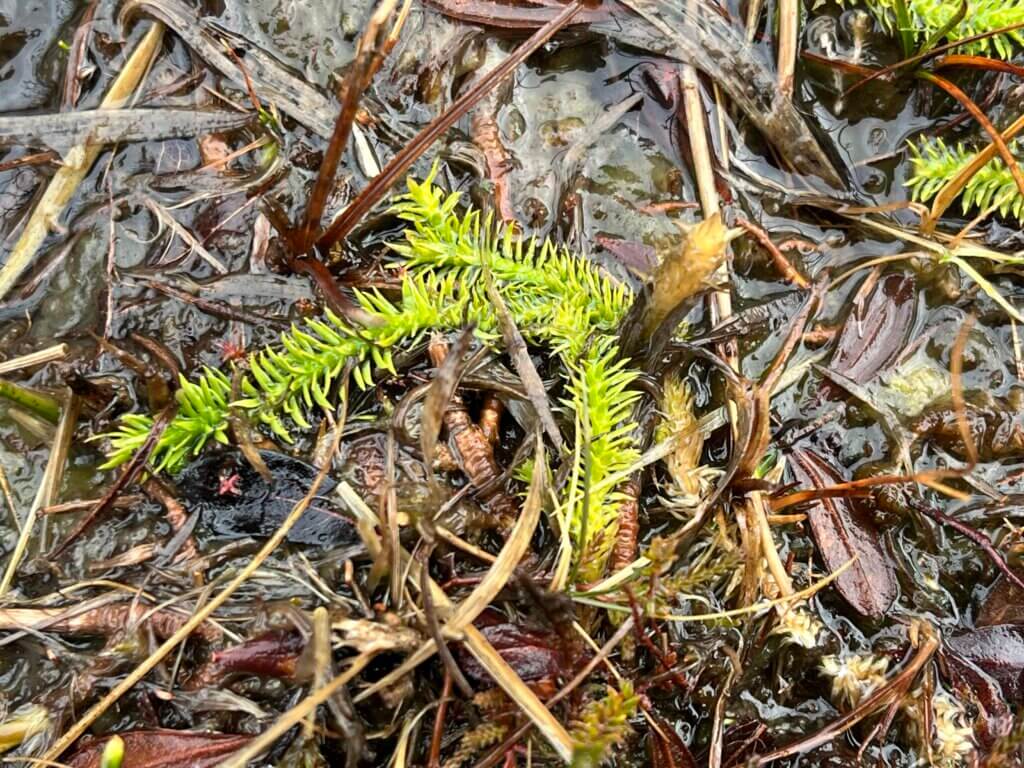
A botanist has rediscovered four species of clubmoss – ancient plants whose ancestors fossilised millions of years ago to form Scotland’s coal forests – in Dunbartonshire. One of them, the Marsh Clubmoss, is a real rarity which hasn’t been seen in the area since 1854.
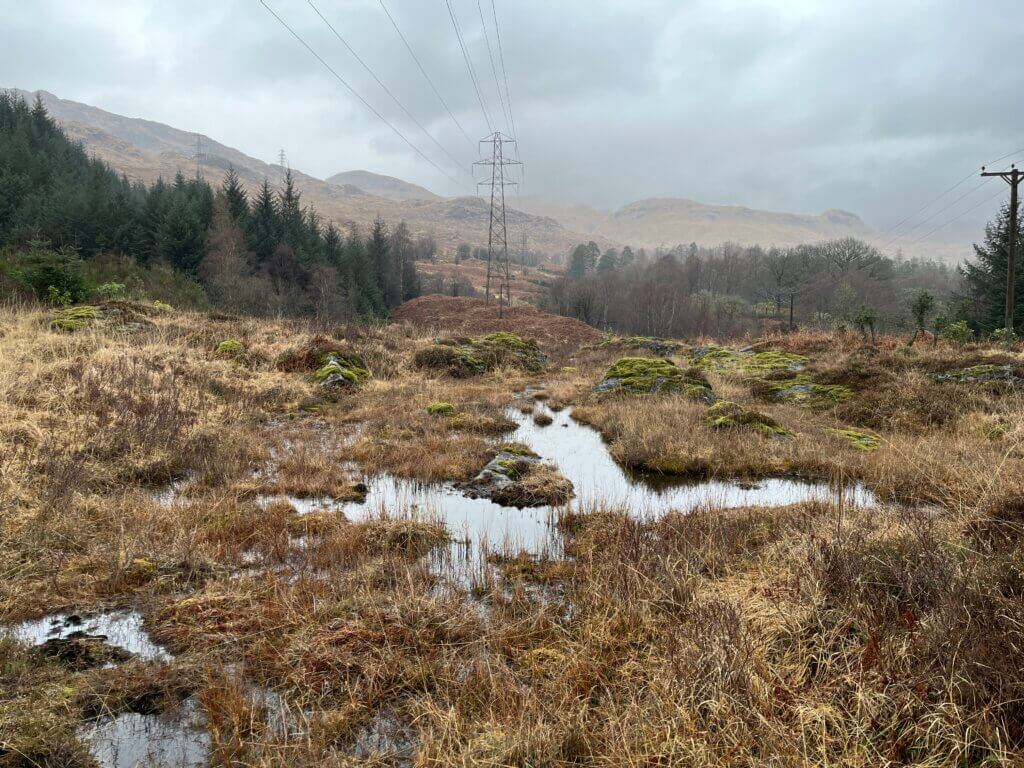
Matt Harding, Scotland Officer for the Botanical Society of Britain and Ireland (BSBI), set out earlier this month on a mission to look for the Marsh Clubmoss at a known site in Perthshire, where the population had been declining in recent years. Sadly, he found no plants remaining at that site along the shores of Loch Lomond, but struck lucky when he crossed over into Dunbartonshire and ventured up a pylon ride between Sitka Spruce plantations.
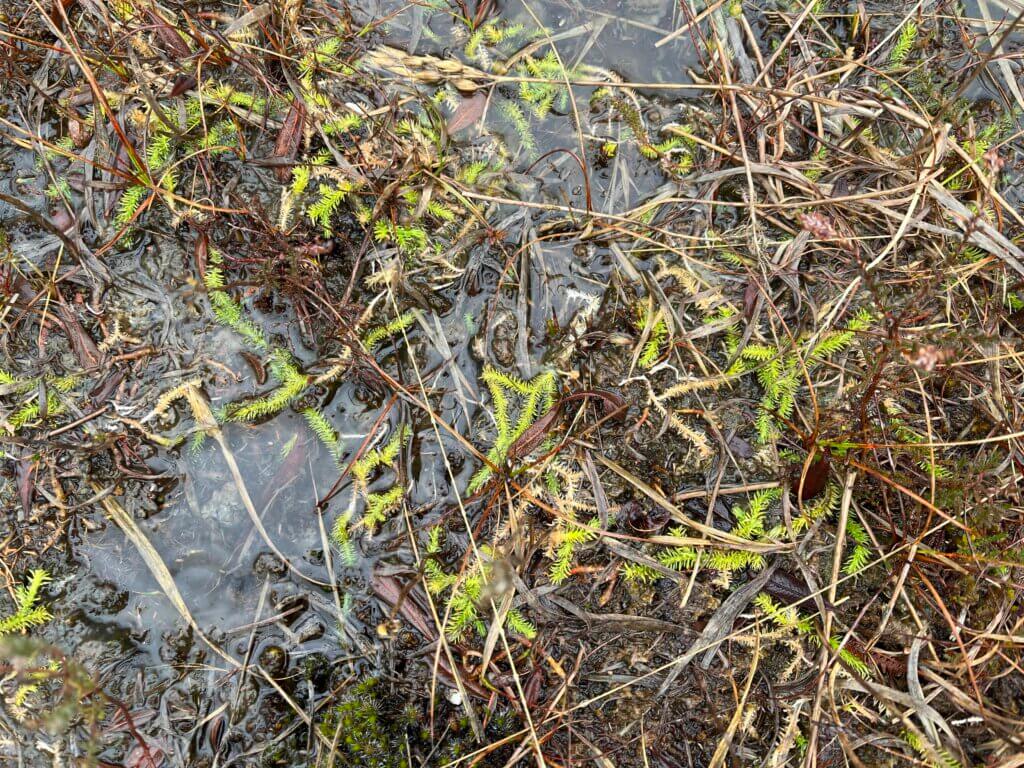
Matt said “Suddenly, my eye was caught by a network of bright yellow-green, bottle-brush-like shoots trailing through the mud in one of the most open patches of the flush. Marsh Clubmoss! With its thin leaves turning outwards from the sprawling stems, it looked for all the world like a collection of yellow-green centipedes crawling chaotically through the sparse, watery vegetation. Bracing against the strengthening rain, I counted the population – around 150 plants, with the remains of some fertile ‘cones’ visible from last year, the reproductive structures that produce the spores that help the plant spread”.
There are seven species of clubmoss found in Scotland; Matt continued his hunt in the area and found three more:
-
the trailing Stag’s-horn Clubmoss with its distinctive, upright, antler-like cones
-
the small and delicate Lesser Clubmoss, whose thin “fingers” may be seen sticking up in species-rich flushes
-
Fir Clubmoss, a chunky, erect plant with spiky leaves – this is the commonest clubmoss encountered by hillwalkers
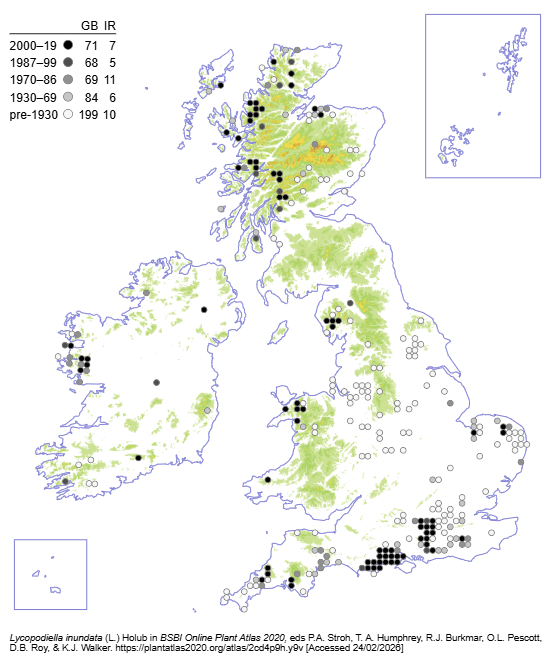
Matt reported his find to colleagues including Michael Philip, the BSBI’s County Recorder for the historic vice-county of Dunbartonshire, who confirmed that not only had Marsh Clubmoss not been seen at this location since 1854, when it was recorded by a local botanist called William Nichol, but that this was the first record anywhere in Dunbartonshire since 1990.
Michael said “What a fantastic find! It just goes to show that, for anyone with a keen eye and a reservoir of experience, very special plant finds are just sitting there waiting to be discovered. Particularly gladdening, therefore, that the finder on this occasion was someone who is passionate about building people’s skills and experience. Leadership by example!”
Although Matt has gone on to investigate several other sites along the west of Loch Lomond where Marsh Clubmoss has been recorded in the past, he hasn’t struck lucky yet. He said “This goes to show what a rarity my discovery was. Although I hope there are more populations out there waiting to be discovered, this small colony growing along just a few metres of a flush above Inverarnan is one of just two extant Marsh Clubmoss sites in the whole of Dunbartonshire and Perthshire combined, and the first record from Dunbartonshire for 36 years”.
ENDS
[registration_form]
The unexpected contribution to conservation of the National Grid!