Plant of ancient woodlands confirmed in northern Scotland
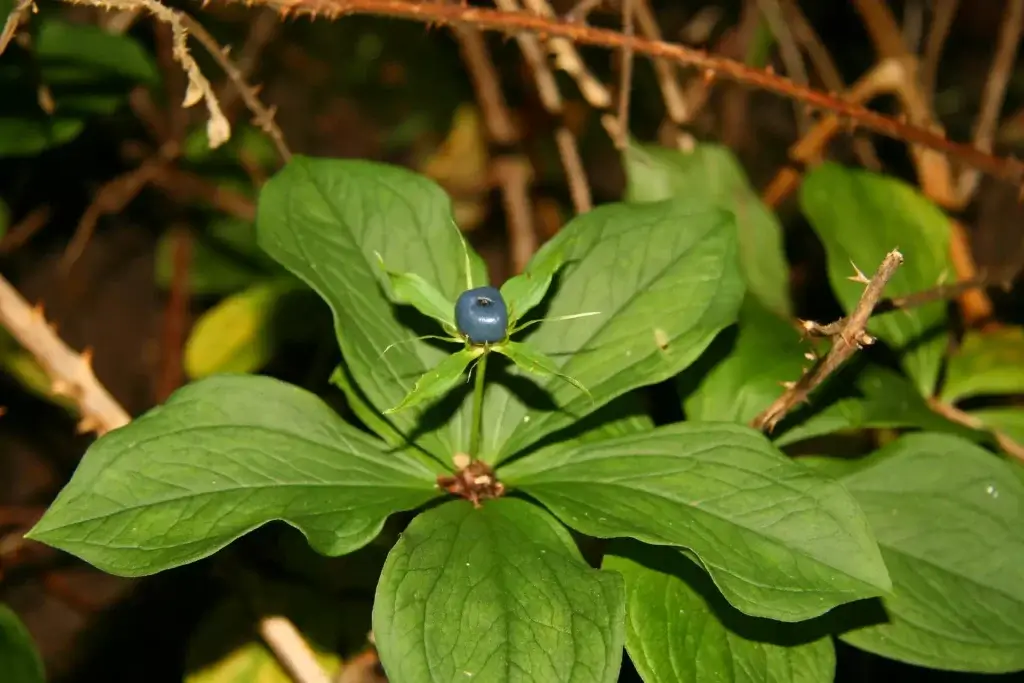
Herb-paris, a plant typical of ancient woodlands, has been confirmed growing in upland birch woodland on a ravine ledge in East Sutherland, in northern Scotland.
The plant was originally spotted by James Rainey, a botanist and ecological consultant, seven years ago but wasn’t reported to the Botanical Society of Britain and Ireland (BSBI) until last summer; since then it has been making its way through the Society’s rigorous processes of checking and validation.
Andy Amphlett, one of the BSBI’s team of experts who verify plant finds, said “The record dates back to 2019 but it didn’t get passed on. BSBI member Gus Routledge noticed last year that this find hadn’t made it onto our distribution maps. Fortunately, James had taken a photograph so I was able to confirm the record from that”.
Matt Harding, BSBI’s Scotland Officer, said “This is the first record of Herb-paris from East Sutherland. There is a record from 1923 at a location just over the border in West Sutherland, but nothing else across the whole of north Scotland since 1971. So this really is a remarkable find and shows that there is still a lot we have yet to find out about the plants that grow in the wilder parts of northern Scotland.”
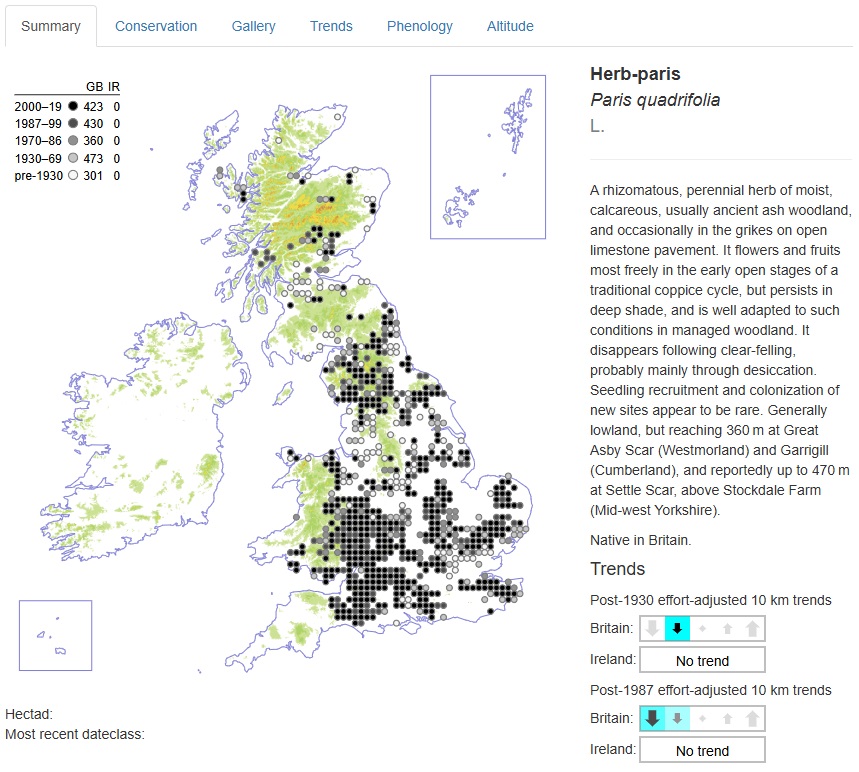
Herb-paris is declining in lowland ancient woodlands across Britain, especially in the north, due to the loss of much of our ancient woodland: it was well adapted to traditional woodland management techniques such as coppicing, and has declined since the abandonment in the C19th of such practices. Herb-paris usually disappears from woodlands following clear-felling and tends not to colonise new sites.
Prof Mick Crawley, the BSBI’s Vice-County Recorder for East Sutherland, said “I’m delighted! What more could you want from a new vice-county record?“.
ENDS
[registration_form]