 This is an American book with lots of mentions of backyards and strange creatures (most of which are bigger than their UK counterparts). But I thought it might be of interest and it certainly was.
The starting point of many books about wildlife and gardens in the UK is a rather traditional garden with flower beds and lawns and maybe a vegetable patch. This book is much more expansive in its thinking and, for me, it was a slight relief to be told about other species because that made the read slightly exotic and the general principles are the same and are well explained here.
I have sat in a few gardens in the USA and Canada from Ontario to Arizona and from California to Massachusetts, and they are a varied bunch. This book seems to me to cover their various challenges and needs, and that is because, in many ways, it is a primer in ecology. The author deals with principles but also with how best to put those principles into practice. He goes beyond, and around, ‘native plants are best’ and points out that it does depend on how many you have in terms of area covered and how many you have in terms of number of species and therefore opportunity to be in-play through the year.
At first glance, this might seem an unlikely book for those wanting to attract wildlife to their UK garden but alongside a couple of UK-based books this volume would add a different perspective to the mix.
The reader finds that the Pronghorn is a good gardener, but if you do encourage one into your suburban garden plot then please do let me know.
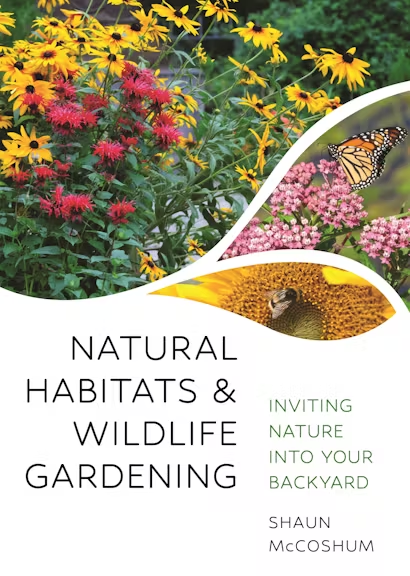
The cover? It could be prettier and less white! I’d only give it 6/10.
Natural Habitats & Wildlife Gardening: inviting nature into your backyard by Shaun McCoshum is published by Princeton University Press.
You could buy this book from Bookshop.org and I have set up a booklist to make that easy through this link https://uk.bookshop.org/shop/MarkAvery Disclosure: I am an affiliate of Bookshop.org and I will earn a commission if you click through and make a purchase
[registration_form]
Regarding the planting of native species, it is interesting to note that some of the exotic plants British gardeners love to put in their borders, such as rudbeckia’s, are native in parts of North America!