Scott Weidensaul visits successful conservation projects in order to celebrate achievements and to try to dispel feelings of gloom about the natural world. I enjoyed reading about these dozen successes, some of which were, for me, close to home (bird of prey recovery in the UK and rewilding at Knepp Castle in Sussex) whereas others were new to me. The scope of the featured successes is nowhere near global with most being from the USA and Canada with Bulgaria, Romania and Ukraine completing the set though reference is made to other studies where appropriate.
The author is clearly a birder and both knows about birds and cares about them. He also writes very well and the case studies zip along with pace. This is a good read.
The visits to the projects take us to mountains, deltas, coasts, prairies and forests so there is a good variety of habitats and issues to explore. If there is a conservation Anna Karenina principle (All happy families are alike; each unhappy family is unhappy in its own way) then this book provides evidence that it must be along the lines that successful conservation projects are well-researched, well-monitored, well-funded, long-term, flexible enough to respond to events, have dedicated staff and great leaders. No wonder many projects fail! We can learn from failure but we can also learn from success.
The accounts of the conservation projects are mostly in the form of visits to the sites and chats to the people involved. The people are really interesting and are almost always people intimately involved in the successful projects. As I moved through these pages I often wished I had been standing next to the author, seeing these birds, hearing the stories of their recovery and getting to know people who have made good things happen. If I had to pick the one where I envied the author the most, it would be talking to ranchers and seeing Mountain Plovers in Colorado. I think I must have passed that way several years ago and not lingered, but now I’ve revisited vicariously and Weidensaul has asked many of the questions whose answers I would have sought (and there is no carbon on my conscience).
I would have liked to hear a few more alternative voices. Conservation successes are not easily won and few come about through immediate consensus of all interested parties. Recovery of declining species almost always involves some people doing things that they are not initially motivated to do. I would have liked to have heard a little more about the obstacles overcome and the obstacles to scaling up these successes.
This book allows us to bathe in a pool of conservation success which is a welcome relief from the choppy waters, whirlpools and dangerous currents of many conservation projects. I enjoyed it a lot and learned a lot. It claims to be an optimistic look at conservation projects but we all know that some things are going well, that’s realistic not optimistic, but that too much is going badly, and that is realistic too and not pessimistic. Our task is to add to the list of successes as quickly as possible and considering successes helps both our morale and our determination.
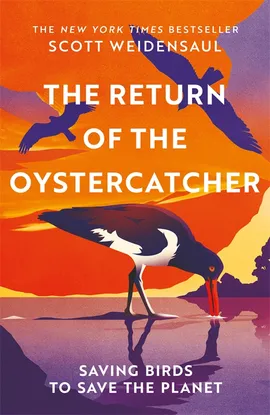
The cover? I think it’s very attractive and the subtitle does tell you what the book is about. I’d give it 8/10.
The Return of the Oystercatcher: saving birds to save the planet by Scott Weidensaul is published by Picador.
You could buy this book from Bookshop.org and I have set up a booklist to make that easy through this link https://uk.bookshop.org/shop/MarkAvery Disclosure: I am an affiliate of Bookshop.org and I will earn a commission if you click through and make a purchase
This book review is based on one I was commissioned to write for the BirdLife International quarterly magazine (January-March 2026).
[registration_form]
Spot on review of a great book I got out of the library a few weeks ago.