Tim writes: skuas are closely related to gulls but differ in their bill structure. In summer a lid develops from the base of the bill covering the nostrils. In fact, the old name Pomatorhine for Pomarine Skua translates from Greek as lidded nose, and that lid is visible here in the sitting bird. These are…
Category: THE PHOTOGRAPHS: by Tim Melling, Oscar Dewhurst, Paul Leyland, Guy Shorrock, Brian Leecey
Tim Melling – Hen Harrier
Tim writes: according to the RSPB, 2019 was a record year for Hen Harriers in England with 33 young fledged from 9 nests. But it is within my memory that 30 pairs nested in Lancashire’s Forest of Bowland alone. Nine nests for the whole of England is perilously low. Quoting from RSPB recently “Hen harriers…
Paul Leyland – Rhingia campestris
Paul writes: Rhingia campestris is one of the most recognisable hoverflies, it’s often known as the Heineken hoverfly and was the subject of a very early post of mine on Mark’s Blog. I described it then as common and widespread throughout the UK. In only 2 years things have possibly changed dramatically. The drought of…
Tim Melling – Cetti’s Warbler
Comments Off on Tim Melling – Cetti’s Warbler
Tim writes: I’m old enough to remember when Cetti’s Warblers were a very rare bird in Britain. The first one ever to be recorded in Britain was in 1961 and breeding was confirmed in 1972. But since initial colonisation numbers have increased to around two thousand singing males. But most of these are in the…
Paul Leyland – Cistogaster globosa
Paul writes: If this was a bird, rather than a fly, I would expect to look out of my kitchen window and see half a dozen people with scopes and binoculars walking up and down the field path, all hoping to add to their Yorkshire List. As it is, flies are not so sought after….
Paul Leyland – Leafcutter Bee
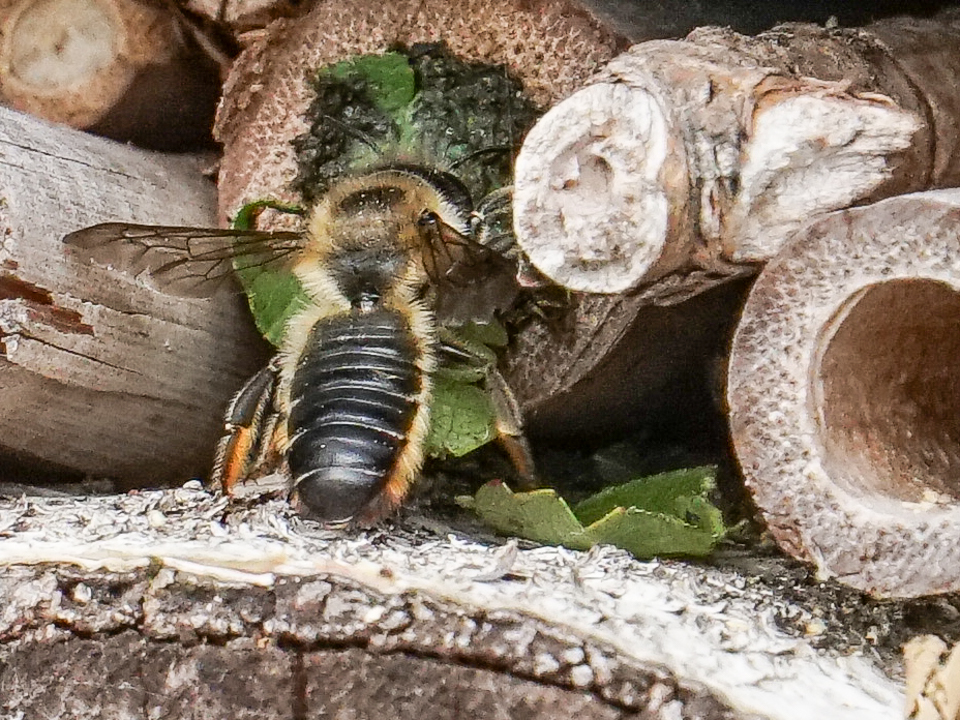
Paul writes: if you have a bee hotel in your garden and notice that some of the tubes have been sealed with a green leaf then you have a Leafcutter Bee in residence. Another piece of evidence you may find are circular cut-outs from the edges of leaves on your plants. Leafcutter Bees are solitary…
Tim Melling – Penguin altercation
Comments Off on Tim Melling – Penguin altercation
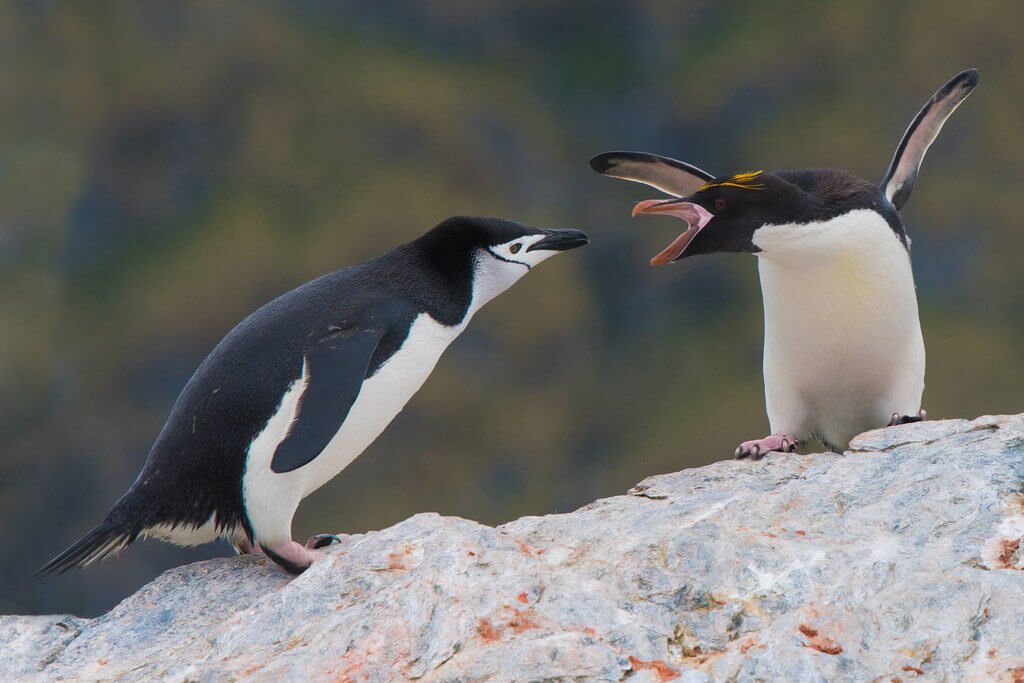
Tim writes: penguins usually seem to stick with their own species, even when they nest in the same area. So this was a rare instance of inter-specific aggression between a Macaroni and a Chinstrap Penguin. I took the photograph at the south end of South Georgia where both species breed. This was at the beginning…
Paul Leyland – Drinker moth
Paul writes: the Drinker (Euthrix potatoria) is a regular visitor to my garden at this time of year, it has a wingspan of 25mm or more so is a real beast of a moth. It usually makes itself known by flapping wildly at a window or may even fly through if the window is open….
Tim Melling – Great Shearwater
Tim writes: Great Shearwater was my final one of the regularly occurring bird species that I managed to see in Britain (back in 1990). Though it is very rare in Britain away from the Southwest, and even there it only occurs in late summer/early autumn after strong westerly gales. Most bird migration is generally in…
Paul Leyland – Blue-winged Tachinid
Paul writes: I came across this beautiful fly last week, along a wide footpath through the woods near Allerston in North Yorkshire. July is a great time for finding flies feeding on umbellifers, the flowers are at just the right height for comfortable viewing and there are lots of them in the right habitat. There…