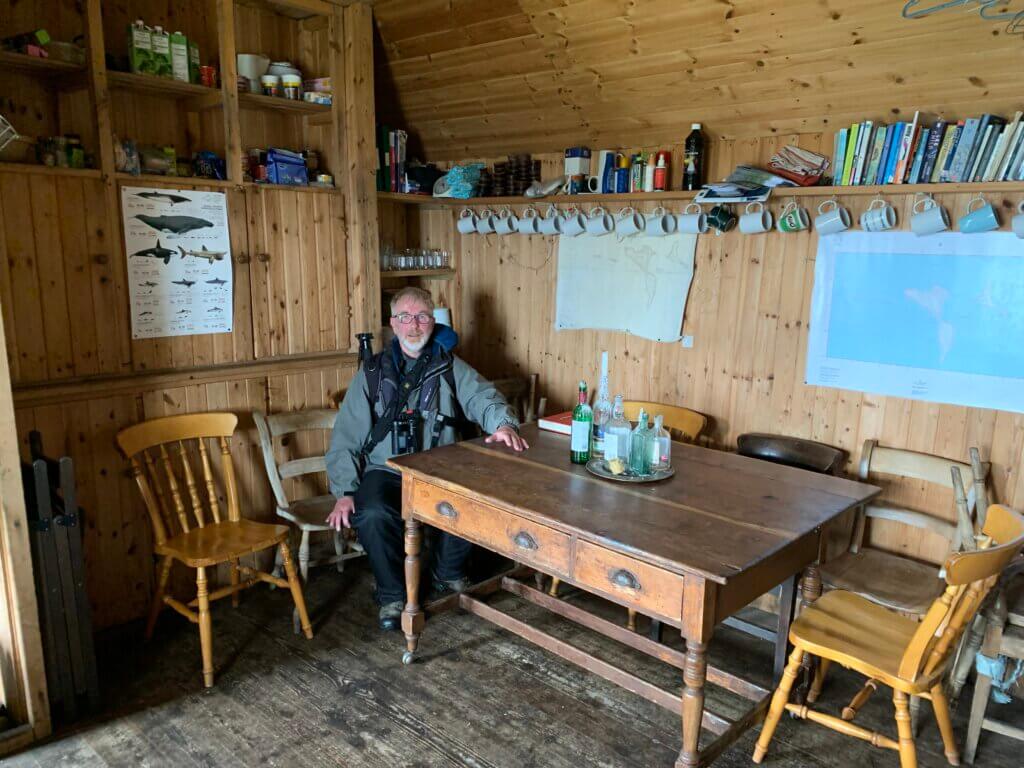
Alick Simmons spent most of his career in public service serving as the UK Food Standards Agency’s Veterinary Director (2004-2007) and the UK Government’s Deputy Chief Veterinary Officer (2007-2015).
He is the current chair of the Zoological Society of London’s Ethics Committee on Animal Research and a member of the Wild Animal Welfare Committee. He sits as an independent member of both the RSPB’s Ethics Advisory Committee and the National Trust’s Wildlife Management Advisory Group. He is former chair of the Universities Federation for Animal Welfare and the Humane Slaughter Association.
He is an avid amateur naturalist.
His book Treated Like Animals: improving the lives of the creatures we own, eat and use was published by Pelagic Publishing in 2023 and reviewed on this blog – click here.
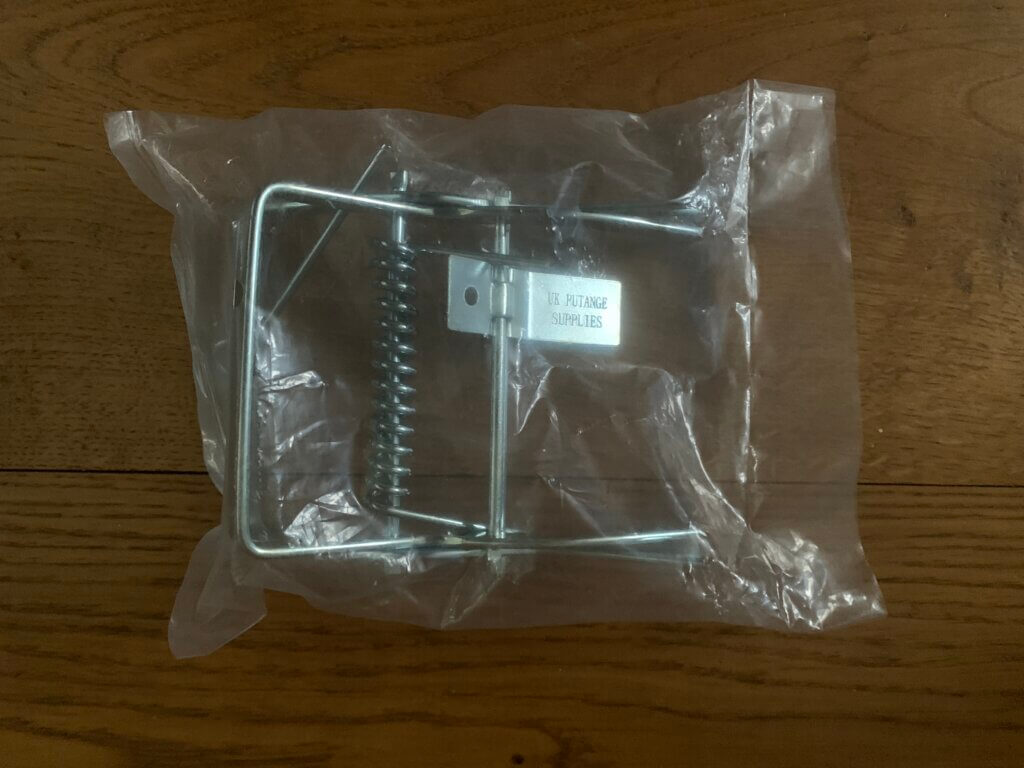
Recently, I have been musing about the killing of wildlife. Not that I do much of it. Deliberately killing wildlife that is. None at all, in fact. I haven’t handled a firearm since 2001 and I expect I never will again. I own a single mole trap which I use as a prop when I give student lectures on the ethics of wildlife ‘management’. It arrived in a sealed plastic bag and there it will stay.
The last wildlife I killed was a moribund badger that I found unconscious at the side of the road in the village where I live. It must have been over 15 years ago.
The reason for the musing is quite different – I’ve written a lot about the differing standards that we, as a society, apply to animals in different circumstances. How we move mountains to retrieve a trapped dog while carelessly dosing the environment to kill rats and mice using breathtakingly inhumane poisons. Our knowledge of anatomy, neurology and physiology is surely enough to conclude that the difference in the capacity to suffer in a rat or a dog is hardly worth noting. And yet, we blithely ignore the plight of the rat.
On the face of it, the law doesn’t draw any distinction. The Animal Welfare (Sentience) Act 2022 states that the government must take into account how policy ‘might have an adverse effect on the welfare of animals as sentient beings.’ When it comes to vertebrates, there are no exceptions. Dirty mongrels and disease-ridden rats have the same status as a Cruft’s champion or a Derby winner.
In practice, it’s a very different matter. The relevant legislation is clear; you need training, supervision and an authorisation to kill farmed animals or research animals. The methods are prescribed, supervision and inspection are rigorous and the penalties for non-observance are severe. In short, there is accountability. Then there is wildlife, where there is almost none.
****
There’s a debate to be had about whether we should be killing wildlife at all. And in particular whether the routine killing of native wildlife to protect the narrow interests of a minority who kill non-native wildlife can ever be justified. But that’s not the subject of this blogpost; this time it’s about the ‘how?’ rather than the ‘why?’.
Exactly ‘how’?
There are many legal ways to kill wildlife – poison, shooting, lethal spring traps, cage traps followed by killing, wire snares followed by killing, etc. And rather fewer illegal methods.
What method is used depends on the species, other circumstances and, to a lesser extent, the requirements of the legislation. But in contrast to, say the Act that governs animals used in research, the requirements are sketchy.
Suppose you are a research scientist and you have a Home Office licence to conduct research on ferrets. At some stage you may have to kill them – for example, if detailed sections of the brain are required. You will need to be registered as competent – this registration is limited to the species and methods in which you have been trained. The training covers both theory and practice. With minor exceptions, you may only kill animals in a specified area of the licensed establishment using one of the methods listed in the relevant Act or a method bespoke to the licence approved by the regulator. You will need to confirm death using an approved method before, say, performing a post-mortem examination. You will need to participate in appropriate Continuing Professional Development (CPD). Draconian? Or simply appropriate given the risks to animal welfare?
If you are killing farmed animals – in a slaughterhouse, on a farm or for disease control, the rules are similar to research animals but they are not quite so detailed or rigid. The approved methods and equipment are set out in regulations. Slaughtermen need to be licensed which can be granted following appropriate training and supervision. There is no CPD requirement but supervision is strict. Draconian? I hardly think so.
Both research establishments and slaughterhouses are overseen by powerful regulators – the Home Office and the Food Standards Agency, respectively.
Let’s return to the killing of wildlife. In most cases this is done by people dedicated to the task – gamekeepers and ‘pest’ controllers (although much of the equipment is on free sale. I bought my mole trap on Ebay). There is no statutory requirement for either of these ‘callings’ to be licensed, little requirement for training and no CPD requirements. The British Association for Shooting and Conservation offer myriad training courses and some of it includes tuition on the humane dispatch of, say, a fox caught in a snare but the training is not mandated.
Take the General Licence for the taking and killing of carrion crows. One of the conditions reads ‘Any birds killed in accordance with the general licences must be killed in a quick and humane manner.’ There’s no mention of the method to be employed, no requirement for training and no supervision. Vague or what?
Suppose you’ve caught four crows in a Larsen trap. How is it done?
- Perhaps they are stamped to death like those hen harrier chicks,
- or beaten to death with a stick like that buzzard,
- or crushed with pliers (this equipment is advertised as being ideal for the job but is considered inhumane by the Humane Slaughter Association)?
And in the absence of any accountability and in the absence of an independent inspectorate we probably never will. I haven’t gone into lethal spring traps, snares and poisons but, with one or two notable exceptions, the circumstances are similar.
And there we have it. The hundreds, perhaps, thousands of the people who use these methods are almost completely unaccountable – in sharp contrast to the killing of animals on farms, in slaughterhouses and in research establishments. But in the eyes of the law, all vertebrate free-living or captive, wild or domestic are considered sentient.
And yet when it comes to our wildlife? As ever, ignored and forgotten.
[registration_form]