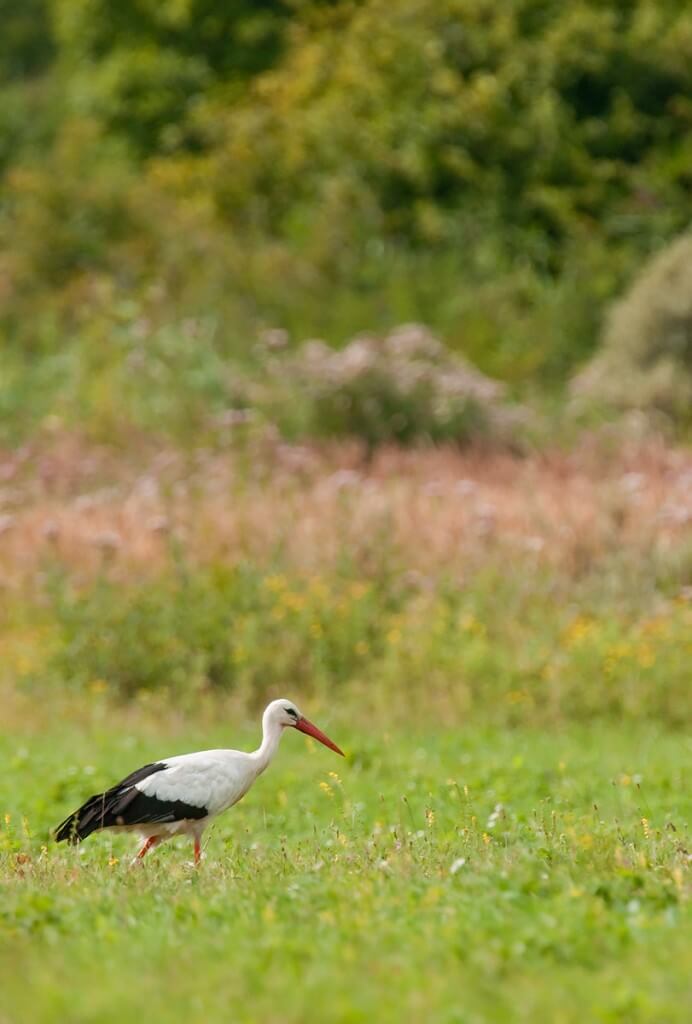
On Wednesday morning, the BBC Radio 4 Today programme aired a short chat (click here – in the last five minutes of the programme) about White Storks between Tony Juniper, the Chair of Natural England and Isabella Tree, author, rewilder and leading light in the Knepp project. I guess this was scheduled because even Today could see that blanket coverage of not much actually happening in Downing Street didn’t make good radio and, of course, a mere wildlife story could always be canned if something important did come to pass.
The story was prompted, I guess, by this interesting blog by Natural England – click here. Natural England gradually seems to be moving away from preventing Beavers being restored to our fauna and towards being tougher on releases of charismatic species which have a dubious history of having bred in the UK since, maybe, medieval times.
Maybe Today should have asked Natural England why it has changed its mind? What evidence on the status of White Storks has changed for it now to be sounding a (welcome) note of caution? It might have been fun to ask Tony whether Knepp would need a licence if it wanted to release more White Storks and I guess he would have to say that because Knepp is not an SSSI then no licence would be needed. The follow up question would then be ‘What plans does NE have to add Knepp to the pipeline of sites to become SSSIs? After all, a report published by Wild Justice (click here) the other week pointed out that NE has a poor record of adding qualifying sites to the SSSI series?‘ perhaps with a throw away question to Isabella along the lines of ‘Knepp would be thrilled for its work to be endorsed and recognised by SSSI status wouldn’t it?’. I wonder whether Knepp’s position has changed since the publication of the excellent Wilding (see review here) which set out the fact that the Knepp team wanted to retain the option for their children to trash the wildlife value of the site, which was supported by millions of pounds of taxpayer investment, if farming looked like a better option to them.
Black Storks? No thanks!
[registration_form]
My big takeaway from Knepp’s Storks is that they have been able to thrive in our depleted environment. Frankly, I’m not that interested in where they nested in 1492 or whatever and I’m not sure many other people are either. Having trashed our natural environment with gay abandon the conservation lobby seems very hesitant about restoring some of its former glory. And on the subject of SSSI status for Knepp the question I’d ask is not whether Knepp qualifies, thats obvious, but whether the SSSI system is fit for Knepp. SSSI status would be a step in bringing back under control the randomness of true rewildling which the conservation establishment seems to be racing to check. And by the way, isn’t it time we re-named SSSI’s, a title for our best wildlife sites which seperates the experts firmly from the wider wildlife loving population ?
When you say ‘thrive’, I wonder if you are aware of the huge amount of supplementary food (chicks and fish) being put out every day and year-round at Knepp? Mostly aimed at feeding the storks that can’t fly, but a food source used by all storks there. A published article from data in 2023 (https://onlinelibrary.wiley.com/doi/full/10.1002/ece3.71278) shows the huge reliance on this supplementary food source (despite the article’s positively-framed title). I wonder how the breeding population would do without it? We won’t find out for some time, because as the article says “this feeding is expected to end once the non-flying individuals naturally reach the end of their lifespan”, which could mean another 20+ years for this long-lived species.
The term Site of Special Scientific Interest to me always looked like an attempt to characterise sites of higher conservation as only of interest to scientists and academics, not the general public, which would be politically convenient. Bloody awful term that should never have been created in the first place. The name should be changed and very proactive steps to try and ensure as much of the public as possible knows which ones exist in their local area – a lot of them in our area disappeared quietly as only a very few people knew they even existed.