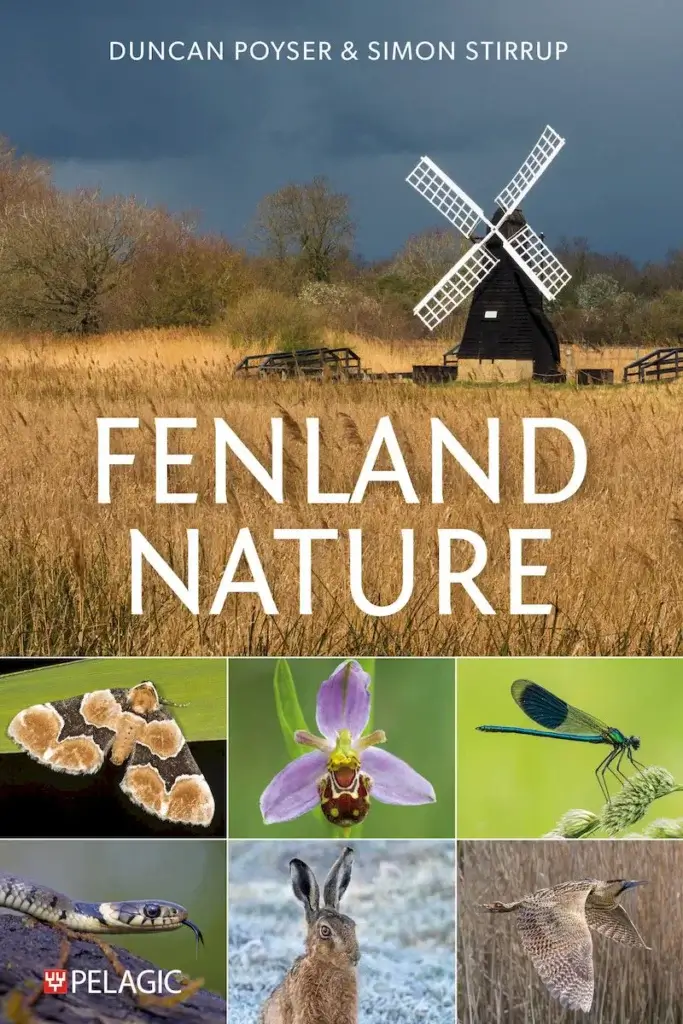
This is a good guide to The Fens which takes a sensible approach to its nature. It describes the history of this low-lying expanse through which the Great Ouse, Nene, Welland and Witham used to wiggle their way but now take more man-decided straighter routes on their ways to The Wash. Maybe 1% of the original Fenland habitats have survived in recognisable fragments and early in the book we are told quite a lot about these precious remnants and rather little about the habitat restoration on sites such as RSPB Lakenheath and the Wildlife Trust Great Fen project (interesting choice but probably fair enough). Most of the other 99% is intensively farmed arable and horticulture.
There is a good review of what makes The Fens important and interesting, taxon by taxon, and another large chunk of text runs through the seasons and what to look out for, but this is not a guide to where to go to see particular species, nor a site by site guide to the wildlife, but a more interesting review of what you might see here and why that makes this area, spread across several counties, of great interest. The Fens aren’t just the boring bits that you need to cross to get to the coast, though, to be fair, a trip to Norfolk would be quicker if the road from Peterborough to Kings Lynn were much shorter.
I liked this book a lot, and it made me think about revisiting some sites to which I haven’t been for years.
The text (Duncan Poyser) is very readable. The photographs (Simon Stirrup) are numerous and very good. Professor Nick Davies’s Foreword is spot on and it is sad to think that there are so few Cuckoos now at Wicken Fen where he and co-workers studied that species for many years.
The cover? Is the view of the wind pump at Wicken Fen clichéd or iconic? I’d go for iconic and the choice of wildlife species below it on the front cover is well made. So I’d give the cover 9/10.
Fenland Nature by Duncan Poyser and Simon Stirrup is published by Pelagic.
[registration_form]