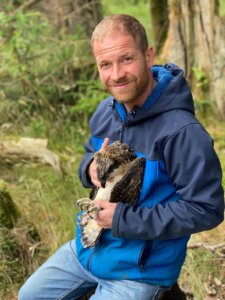
Tom Bowser is the owner of Argaty, a working farm based on the Braes of Doune in central Scotland, which aims to produce food in an environmentally sensitive manner and to make a home for nature. Tom is author of A Sky Full of Kites: a rewilding story (reviewed on this blog) and the forthcoming Waters of Life: fighting for Scotland’s beavers (reviewed on this blog).
The Great Beaver Betrayal

The Scottish Government and its nature agency, NatureScot, could seldom be accused of doing right by wildlife, but recently they reached a new low. This month the shocking news emerged that NatureScot have blocked an historic official release of beavers to Glen Affric in the Scottish Highlands. Conservationists are angry, verging on mutinous.
Trees for Life, who alongside Forestry & Land Scotland (FLS) had led the stymied application, accused the agency of “a mysterious lack of backbone.” The Herald, Scotsman and BBC wrote stories of a “great beaver betrayal”. Celebrity naturalist and Springwatch presenter Iolo Williams took to social media accusing NatureScot of repeatedly letting the wildlife and people of Scotland down, his anger neatly summed up in a five-word sentence: “NatureScot = not fit for purpose”.
Their anger is understandable. Beavers are ecosystem engineers. Their deadwood-filled wetlands are scientifically proven to boost biodiversity. Their dams store water in times of deluge and drought. Scotland is officially recognised as one of the most nature-depleted countries on earth, ranking 128th of 140 countries surveyed for intactness of its biodiversity. If any country needs beavers and their ecosystem enhancing skills, it is this one.
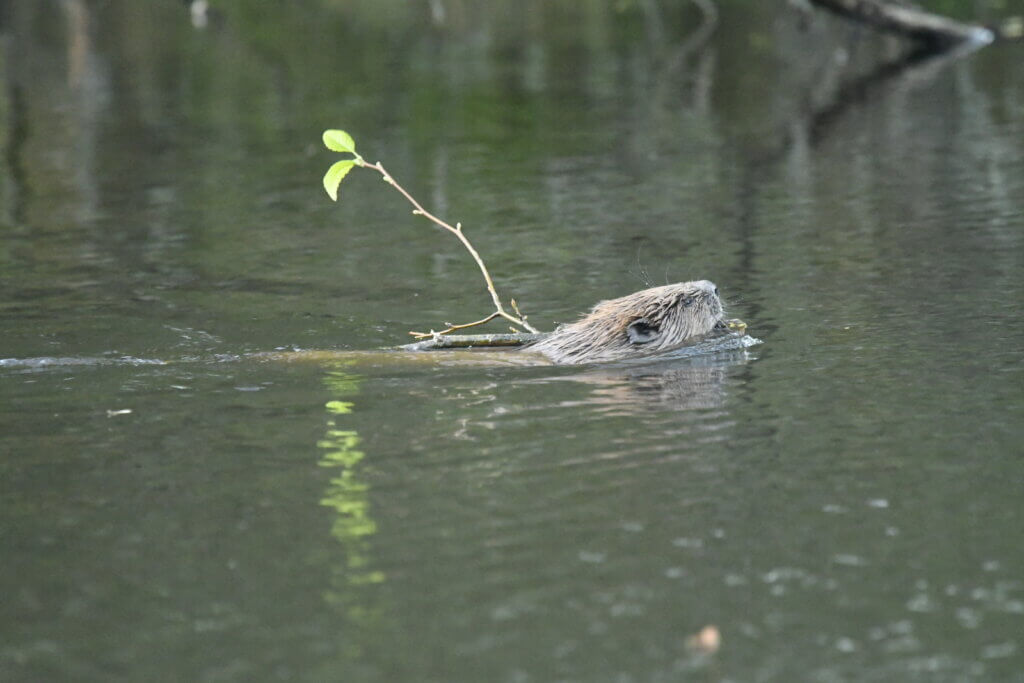
The decision to halt the Affric translocation is baffling on so many levels. Firstly, Scotland has a government-backed national strategy designed to grow our small beaver population by translocating these much-needed animals to new parts of the country. Polling also shows that three quarters of Scots want to see more beaver reintroductions. In addition, we have the world’s most thorough official guidance, leading applicants through how to attempt such wildlife relocations.
FLS and Trees for Life followed this official conservation guidance to the letter, going through two exhaustive years of community consultation. Senior NatureScot officials praised this engagement, describing it as ‘exemplary’ and ‘above and beyond’ what could be expected. And the community in Glen Affric agreed with that verdict – two in three people there supported the proposals.
As seems to be the case with most wildlife reintroductions, a small number of farmers objected loudly. In this instance the dissenters all lived downstream in Strathglass, where beavers have been resident for many years and have caused no issues.
A gold-standard consultation… overwhelmingly backed by the local community… praised by NatureScot, whose job it would be to approve or reject the application… the involvement of another government agency and a leading charity which has appointed an expert Beaver Officer to liaise with the community and manage any issues that might arise… it seemed only right that a licence would be granted, and beavers would soon be headed to the National Nature Reserve in Glen Affric.
But the huge majority of the public which wants to see nature restored in a meaningful way can take nothing for granted in the current political climate.
The application was submitted in December and FLS and Trees for Life waited three long months before NatureScot finally announced that it was delaying its decision, citing concern from the local community ‘and their representatives.’ Now the agency will themselves conduct yet more rounds of consultation. Alarmingly, it appears from their sole short announcement that NatureScot intends only to consult those ‘most likely to be affected’ by a beaver reintroduction – in other words, those opposed to the plan; even though the presence of beavers would almost certainly bring social, economic and environmental benefits to the entire community
Something is very wrong with this picture. How did NatureScot go from praising the application to obstructing it? Could it be, as some have since wondered, that the agency succumbed to pressure from external forces?
Unfortunately, that seems highly likely. Ever since the collapse of the Bute House Agreement, beavers have had few friends in the Scottish Government. Lorna Slater and her Scottish Green colleagues might have been the best hope these animals had. Keir Starmer and Rachel Reeves subsequently alienated the farming community with changes to Inheritance Tax Rules. With an election year looming, the Scottish Government appears to be making every possible attempt to claw back the rural vote, even if it means further trashing our environment in the process.
At the National Farmers Union Scotland conference, First Minister John Swinney announced that lynx would not be reintroduced on his watch. Rather than adequately rewarding farmers who produce food in an environmentally sensitive manner, Holyrood will also maintain basic subsidy payments (paying them per farmable acre they own). Maintaining the rural status quo seems to be the motto of this SNP government.
Are Swinney, and his heir apparent, Deputy First Minister Kate Forbes, throwing beavers under the campaign bus in this scrabble for further farming votes? And if so, what does this mean for future translocation attempts? Will the SNP continue to defy democracy, turning a deaf ear to the rural communities who so badly wish to see biodiversity-boosting beavers return across this country?
Let us return to NatureScot. If the Affric decision was taken by the politicians, then the beleaguered agency may believe themselves unfortunate to be the victim of the bad headlines that followed. However, they would be utterly wrong to feel this way. As Ruth Tingay wrote in an excellent Raptor Persecution blog on the topic (read here), the agency has treated conservationists with disdain in recent years.
Anyone who has ever tried to relocate beavers within Scotland has had to wade through bureaucratic treacle. I know this because I was the first person to do it. Despite the fact that beavers were living in the wild just five miles away, it took me months to obtain a licence to translocate them to my family farm, Argaty.
Time and time again I was told that our proposal to move beavers from areas where they were destined to be shot was ‘novel and contentious.’ Yet at that time, the agency was dispensing licences in less than 24 hours to farmers wishing to kill beavers. The annual slaughter of one in 10 of these incredible animals only came to an end when Trees for Life took NatureScot to judicial review and shamed the agency into change.
Gamekeepers in known raptor persecution hotspots were also handed lethal control licences – this time to kill ravens on the somewhat dubious basis that the keepers wished to protect wading birds. (The Scottish Raptor Study Group believed the licences were designed to protect game birds, mounted a legal challenge and the fiasco was subsequently stopped in its tracks.) More recently the raptor group learned that they would be made to contact, in writing, all individuals on whose land they hoped to monitor birds of prey, informing them in advance of each date they intended to visit.
This may seem a reasonable request on the surface, until one considers its ramifications. Suppose you monitor birds on a known raptor persecution estate. Would you really want to let the landowners know that you are coming, allow them the chance to cover their tracks and risk subjecting yourself to bullying and harassment from the estate’s keepers? Repeated attempts to stress these points to NatureScot directors were ignored. Only the concerted efforts of raptor group leaders, who escalated the issue to boardroom level, saw this outrageous proposal watered down.
The Trees for Life beaver saga may have triggered anger and upset from those wanting to see meaningful nature recovery, but this storm has been brewing for years. NatureScot is an agency riven by contradictions. Grouse shooting industry lobbyists have infiltrated its boardroom, traditional “kill everything” attitudes dominate its directorship. There are some good people within the agency, but they are too few and the enemies within are too many. As an organisation it does not know whether its job is to stand up for nature or to simply serve the whims of its masters. Had it chosen the former path more often, perhaps it would be better placed to resist political pressure when it comes. Perhaps it would not find itself on the wrong end of so many negative headlines, its brand and reputation sinking lower with each one.
NatureScot do have one option here. The best hope of uncovering what exactly has happened with the Glen Affric beaver proposal lies with the nature agency itself. Should their board wish to repair the broken relationship with conservationists, it ought to begin by providing FLS and Trees for Life with answers.
Why were they made to wait three long months to learn that their ‘exemplary’ proposal was being stalled?
Was the decision made by The Scottish Government or by NatureScot themselves?
What does NatureScot hope to learn from further consultation that has not already been discussed in the two years?
Will they speak with those in the community who are in favour of beaver translocation and those who want to see the social, economic and environmental benefits this would bring to the area, or are land managers’ opinions the only ones that matter?
Most importantly, given how this decision works against the Government’s own Scottish Beaver Strategy, what does this sorry episode mean for the future of beaver reintroduction in Scotland?
Conservationists will not stand idly by while decisions that affect our wildlife and communities are made behind closed doors. NatureScot must provide some answers and do so quickly, before all trust in them is lost.
For John Swinney and Kate Forbes, a bigger question must be asked: are you so desperate to retain power that you will ignore the many and pander only to the few? Is the dream of an independent Scotland – which right now looks as remote as it has ever done – worth robbing future generations of their right to a healthy environment?
Great article. Thanks. We have Trees for Life and one body Forestry and Land Scotland whose prime purpose is growing trees supporting the beaver release and one body whose prime purpose is promoting biodiversity NatureScot opposing it. It is beyond belief!
Surely when the Scottish Government accepted beavers as part of the native fauna of Scotland it meant the whole of Scotland. We had the discussion about beaver release and approved the release of beavers nationally. There should be no need for every translocation to be approved locally.
Tom Bowser is as decent a bloke as you’re likely to get, very reluctant to say a negative thing about anybody. It shows how bad things have got here in Scotland that Tom has written such an angry, searing article, but justifiably so. Yet again it seems in this particular situation the issue comes down to that (significant) element of the farming community that wants to screw every last single penny it can out of the land, taxpayer and consumer at the very least inconvenience to itself – e.g without doing any of that hedgerow planting stuff. In Wales the mutton mafia have essentially stopped any ecological restoration bigger than a postage stamp – no sporting estates on the Scottish model there to throw a spanner in the works, farmers managed it all by themselves.
The farming community has been so good at pre-emptively playing the victim card that there are plenty members of the public up in arms about our ‘poor farmers’, who’ve never even met one (should spend a fortnight with crofters on Lewis). The conservation community is self censoring, being as accommodating as possible and the thanks it’s got for it is to be treated like a door mat – see Lee Schofield’s ‘Wild Fell’. We’ve got to stop holding our tongue. A good place to start is with an objective review of what happened to all the public money given to farmers over the years to help wildlife, why exactly has it done so little..well for wildlife at least?
The good farmers are the exception that proves the rule, Tom Bowser and Chris Jones – both big friends of beavers – which is why the NFU will never hold them up as examples of the farming community’s dedication to conservation. They actually show how very, very little mainstream farming cares for wildlife unless, maybe, there’s a very big cheque available to do a very little. I do agree that the people who grow our food should get more reward and thanks for that, but that’s because they’re actually farm labourers, ever hear the NFU make a fuss about them?
Apologies if this is a silly question, but if its been accepted as a native species, why does it need a licence to be translocated?