Nick MacKinnon is a freelance teacher of Maths, English and Medieval History, and lives above Haworth, in the last inhabited house before Top Withens = Wuthering Heights. In 1992 he founded the successful Campaign to Save Radio 4 Long Wave while in plaster following a rock-climbing accident on Skye. His poem ‘The metric system’ won the 2013 Forward Prize. His topical verse and satire appears in the Spectator, and his puzzles and problems in the Sunday Times and American Mathematical Monthly. Email: nipmackinnon@gmail.com
Turbine 15 Mere Stones SD 95155 33938 ///navigate.stack.epidemics
3 February 2026 Welcome to Season 4 of Walshaw Turbines! Welcome also to new readers brought here by the recognition of the King’s Pennine Gateway to Walshaw Moor as one of Seven Wonders of the World; by the website of Stronger Together to Stop Calderdale Wind Farm; by news of the relaunch of Calderdale Energy Park (300 MW) as CEP (240 MW); or by the gothic glamour and horror of Wuthering Heights.
Season 1 covered CWF, a 65-turbine wind farm launched in October 2023 that collapsed under ridicule in October 2024. Ace CEP consultant Donald ‘Transparent’ Mackay says, “It was worse than useless” and he would know.
Season 2 covered the interlude between the fall of CWF and the launch of CEP 300 MW in April 2025.
Season 3 covered the comical launch of CEP (300 MW) and its collapse in the ignominy of the Logika Scoping Report (September 2025), submitted to the Planning Inspectorate without being read by anyone at CWF Ltd, and by nobody at Logika except Roger the Robot who wrote it.
Season 4 will cover CEP (240 MW), reduced to 34 turbines, in which gangrene is already at work.
In Walshaw Turbines we always walk to a turbine site, usually with Teddy the Airedale terrier. We publish our research on the moor and proposal in the context of an actual site.
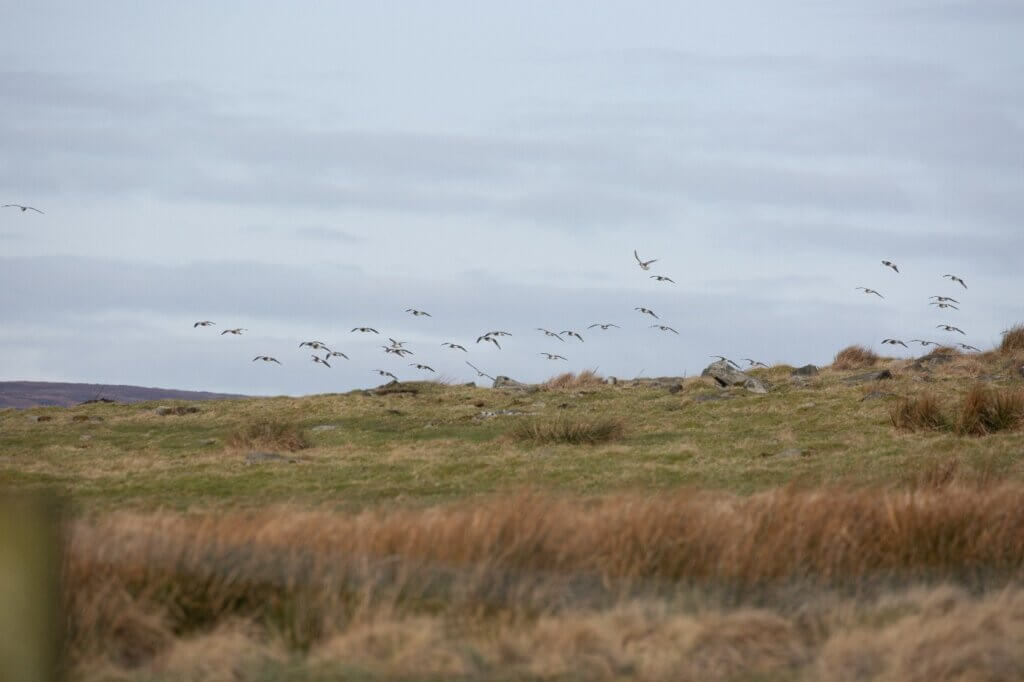
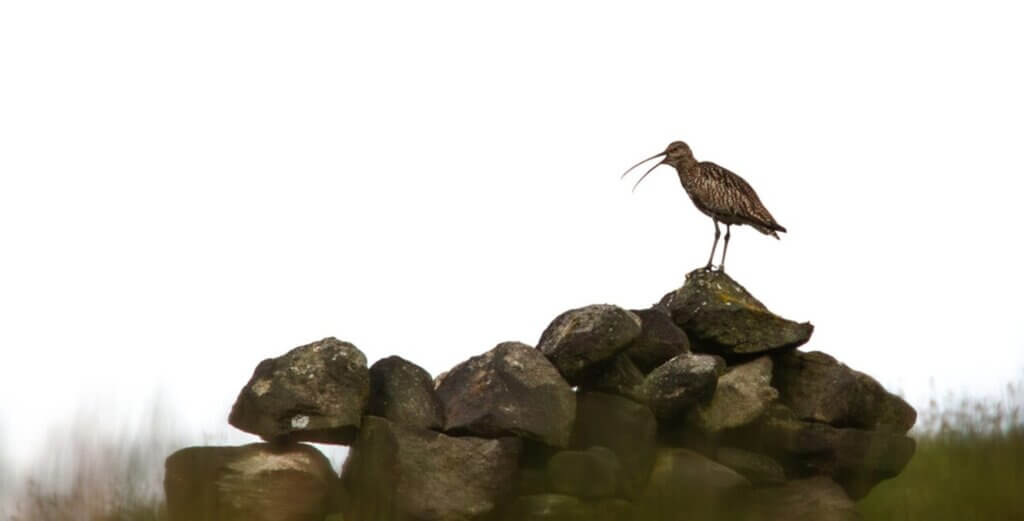
The quickest way to catch up with our work is to read our report for the King which also has many of Kate Haslegrave’s photographs of the birdlife. Other members of the Walshaw Turbines Research Group (WTRG) include Ali West, Stella King and John Page, and the group is part of Stronger Together to Stop Calderdale Energy Park. The key sixth member is Mark Avery, who reads every word we write before he publishes the blogs under his generous umbrella.
A formal analysis of the material in this blog appears on the Stronger Together website. Walshaw Turbines has always had a comic strain. A farce like Fawlty Towers puts fairly normal people, doing their best, in an impossible situation which spirals out of control. The consultants we meet, Donald ‘Transparent’ Mackay, ‘Albatross’ Robinson, PR guru Kevin ‘Good morning, Mr Wilson, here’s a sparrow for your cat’ Whitmore and Project Director Christian ‘The Eagle’ Egal, the Inspector Clouseau of Renewables, are expert professionals and even fairly normal people, but they are in the clutches of an impossible wind farm, and the harder they try, the faster the farce spirals. The boss is Executive Chairman Christopher ‘440 Kelvin-Volts’ Wilson, who may be a fairly normal person, but is not an expert professional. He earned his soubriquet by publishing a website on which “440 Kelvin-Volts” was given as the voltage of the 400 kV National Grid. It’s an easy mistake to make, but not if you’re the Executive Chairman of an electricity generation company.
The drama is financed by £10 million from Algihaz Holdings of Saudi Arabia and our stage is Walshaw Moor, owned by Richard Bannister, who is getting a million pounds a year just for the option.
Walshaw Moor is an internationally designated Special Area of Conservation (SAC) for its peatland habitats, an internationally designated Special Protection Area (SPA) for its thriving, red-listed birds, and an immortal literary landscape, the most famous in the world, the inspiration and setting for the novels of Charlotte, Emily and Anne Brontë. If Christian Egal wants to understand the problem, he should watch Sally Wainwright’s film To Walk Invisible on the BBC iPlayer. International designations and world renown led His Majesty the King to sponsor his Pennine Gateway to Walshaw Moor that is now recognised as a Wonder of the World.
In September 2025, CWF Ltd sent their Scoping Report, written by Logika, to the Secretary of State for Energy Security and Net Zero, who at the time of writing is Ed Miliband. The application is managed by the Planning Inspectorate. Scoping Reports are boilerplate documents, assembled from standard material, and it is unusual for them to have even a single glaring error. The Logika Scoping Report has more than fifty big ones.
We believe the cause of this staggering error rate was the rush with which it was written, and that Logika used prototype artificial intelligence. It may be the first Scoping Report for an NSIP that has been sabotaged by AI.
We call the Logika AI “Roger the Robot” because of what he did to the CEP Scoping Report. Roger thinks that West Yorkshire is west of Lancashire, that the A464 goes to Hebden Bridge when it must be in the M4 corridor, that Walshaw Moor is covered in tors, and that Glasgow’s River Kelvin has its source at Dove Stones, and is Britain’s longest river at 237 miles. We have asked Marc Davies of Logika to point to a Scoping Report with even 5% of the errors of the CEP one, and he has been unable to do so.
We know that nobody senior at Logika or CWF Ltd read Roger’s Scoping Report before it was sent in. It is an unsigned Revision 00. Under Shadow Flicker and Noise are two maps of a wind farm layout, but neither is a map of CEP (300 MW) then under consideration. Lydia MacKinnon of Stronger Together discovered those maps five minutes after opening the 577-page document: “I’ll start at the back…”
Naturally, a document full of such glaring errors was hapless at a deeper level too. The Hilltop Parishes, Wadsworth, Haworth with Stanbury, and Oxenhope, eviscerated the detail of almost every paragraph and then torpedoes from Natural England and the Environment Agency left it holed below the waterline.
Announcement of CEP (240 MW)
On 3 February 2026 I went as consultant to Haworth with Stanbury VC to a meeting with the developers in Hebden Bridge. This was organised for the Hilltop Parishes by Jon Kimber of Wadsworth PC, and it was a triumph for him and his constituents. At the table were 440 Kelvin-Volts himself and Donald ‘Transparent’ Mackay, with Traitor Stephen Bibby among the most ingenious inhabitants of Lewis since the chessmen emigrated to the British Museum. Something was afoot.
My councillor friend Zoë caught sharp glances exchanged between the consultants when I walked in and I was glad to see Jenny Shepherd of Ban the Burn was the other stowaway.
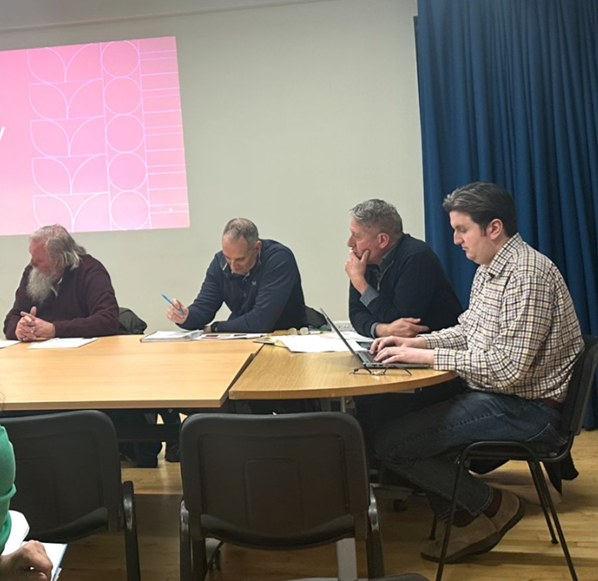
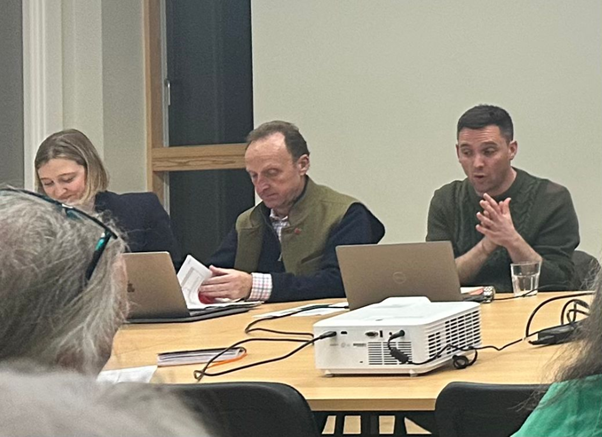
The consultants introduced themselves. In the chair was the ever-obliging Kevin Whitmore, last seen running the webinar at which Donald Mackay finally admitted that the on-site aggregate (crushed rock for roads and concrete) is no good. The discovery of this fact is related in Bedlam Knoll in Season 1. Kevin comes across very well in person, like the love child of Mikel Arteta and Fiona Bruce.
Poor old 440-Kelvin-Volts now knows that the less he says about the wind farm of which he is Executive Chairman the better his consultants and investors like it. As Denis Thatcher said, “A whale is only harpooned when it spouts.” Whatever he is paying Whitmore and Mackay to fill the charisma void, it isn’t enough. It is a waste of their talents to be chained to his millstone.
When I asked Oliver for his surname he said, “I’m not willing to share it with you at this time” thus showing a fine instinct for his enemy. Oliver is one of the few (Plato, Judas, Pelé, the artist formerly known as Prince) known by a single name, and he evidently finds grumpy mononymity to be an asset in a PR industry where Olivers and Olivias are so uncommon.
Ashley Robinson is the big fish in charge of delivery of the Development Consent Order (DCO). An Australian, Mr Robinson is certainly less combustible than a Tasmanian gum tree and no more chippy about his Scoping Report than Oxenhope Fishery on a wet Good Friday.
Jon Kimber introduced the meeting. In 2024, Wadsworth PC did professional research into parishioner attitudes to Calderdale Wind Farm, and Jon is in the strong position of knowing for certain what his constituents think. He can dismiss the questionnaires collected at the non-statutory consultation because his council used non-leading questions. This doughty wielder of the broadsword of democracy got off on a superb exit line: “The agencies have responded to your Scoping Report, Christopher, and really you ought to be asking Logika for a full refund!”
In the admiring silence that followed I asked Ashley Robinson:
“Your Scoping Report: what went wrong?”
“The Scoping Report isn’t wrong. You saying it is wrong is simply a matter of opinion.”
“So, are you saying the road numbers are right?”
“The Planning Inspectorate has published a correct list of the road numbers.”
“I know. I lead the group that wrote it.”
That was a bonzer prawn to throw on the barbie, as we say in the West Riding.
“We admit that mistakes have been made. The important thing is that we learn and move forward.”
I judge from this defensiveness that Ashley Robinson has been told to wear the dead albatross of the Logika Scoping Report. One of Ashley’s jobs was to glance through Logika’s work, looking for the big mistake, “the brown-eyed mullet in your grundies”, in that vivid Yorkshire phrase. He didn’t find anything in his grundies because he didn’t read the report. Real scoping reports don’t have big mistakes, but Ashley’s has twenty road-numbering errors on the same page.
Success has many fathers, but failure is an orphan. Somebody is responsible for all the wrong roads discovered by Ali West (PI Scoping Opinion p 393), and somebody had to look at the Flat Earth hydrology map (SR 8.2 8.1 p244), notice that it had been labelled by a nine-year-old, and ask some questions of Logika. Since neither Christopher Wilson, Christian Egal nor Mark Davies of Logika have accepted an ounce of blame, the albatross hangs heavy round Ashley Robinson’s neck.
Milestones delayed
Harriet Coul took us through the revised timeline. Ms Coul escapes a pen portrait for now, but since she is line-managed by Ashley Robinson, maybe she was also meant to flick idly through the Scoping Report looking for bloopers and has to wear the boss’s albatross on bank holidays.
The Programme Document she showed us reveals that CEP has already slipped by five months because the Statement of Community Consultation (SoCC) was due in November 2025 and is now forecast to appear in April 2026. Here are old and new side by side.
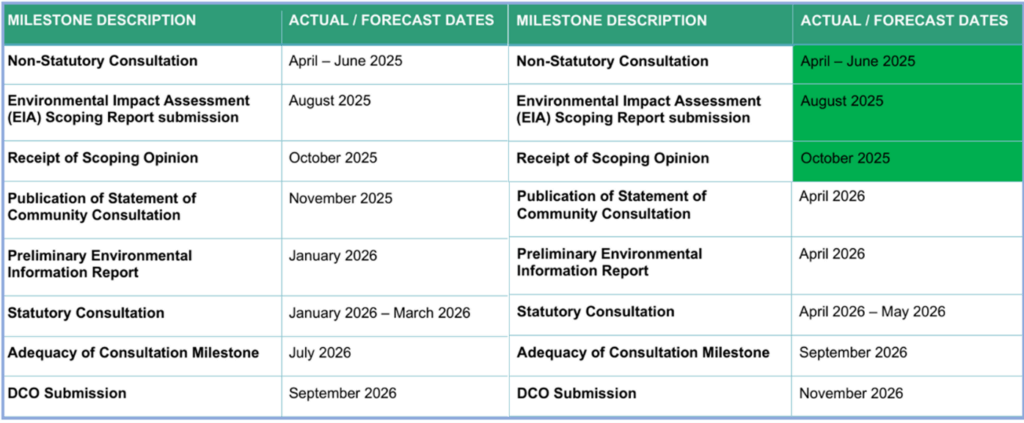
The new Programme Document has an optimistic concertina of the subsequent process by three months to get to a submission date in November 2026. This is whistling in the dark to keep the investors’ spirits up. The materials and structure of the Scoping Report that should have fed the SoCC were completely shredded, and the cause of the failure was rush. Now the failure is shortening the time for statutory consultation, which is much more complex than the boilerplate simplicities of a Scoping Report and will be even more rushed. I said to our legal team after the non-statutory consultation that “CEP is as bad now as it will ever be” but that made no allowance for the compound interest spiral of farce, that finally puts Basil the rat in a biscuit tin that is offered to the public health inspector.
The planning inspectors say in their overarching comment at 2.0.1:
“It should be noted that if the proposed development materially changes prior to submission of the DCO application, the applicant may wish to consider requesting a new scoping opinion.”
As we shall see, the proposal has materially changed, so the specifics in the Scoping Report are now even more wrong than they were last September. The Transport section was riddled with errors but these are now wrong facts about an abandoned wrong plan because Donald Mackay admitted that they can’t get the stone convoys up the A6033 (or the A6038 and A6088 as Albatross Robinson will find it is called in his Scoping Report, if he ever gets round to reading it) through Hebden Bridge.
The inadequacy of the expensive but useless Logika maps will delay every statutory consultee because their experts must check if a map is accurate or by Logika. There must be a penalty in delay if a document that cost high six-figures is useless. There must be a penalty if confidence in Christian Egal’s leadership, already low after numerous comical errors, has been so eroded by the failed Scoping Report that the statutory consultees cannot trust a word without ground-truthing it first.
Everything that has gone wrong in the process so far has been because CWF Ltd are in a hapless rush. This rush explains their choice of the inexperienced Logika to write the Scoping Report, in a hurry, using AI to cut the corners. Not reading the report and sending it as Revision 00 to the Planning Inspectorate was more rush. We think the investors must be restless. I write to Fozia Gulzah the CEP auditor now and again to make sure she is kept informed about the company prospects. The welfare of the Saudi money is her legal responsibility, we need foreign capital to pay for our electricity supply because we have lost control of the National Debt, and the reputation of UK renewables must not be further tainted abroad by CWF Ltd.’s comical incompetence.
The proposal has no chance of reaching its Adequacy of Consultation Milestone in September 2026. If CWF Ltd do not ask for the second scooping opinion the Inspectorate “suggest”, then they will always be vulnerable to a milestone failure, and the longer they delay the reset, the greater will be the cost. It would also be reckless not to run a second non-statutory consultation. It must be lawful this time, presenting a wind farm that can actually be built, to which the public can finally give the “intelligent consideration” required by Gunning Principle 2.
“2. There is sufficient information to give ‘intelligent consideration’. The information provided must relate to the consultation and must be available, accessible, and easily interpretable for consultees to provide an informed response.”
We have lodged extensive evidence in legal letters that the consultation as conducted was unlawful under Gunning 2. Although the CEP lawyers “strongly contest” this assertion, they have never advanced evidence against our reasoning that CEP (300 MW) was not a viable wind farm so nobody could give it intelligent consideration.
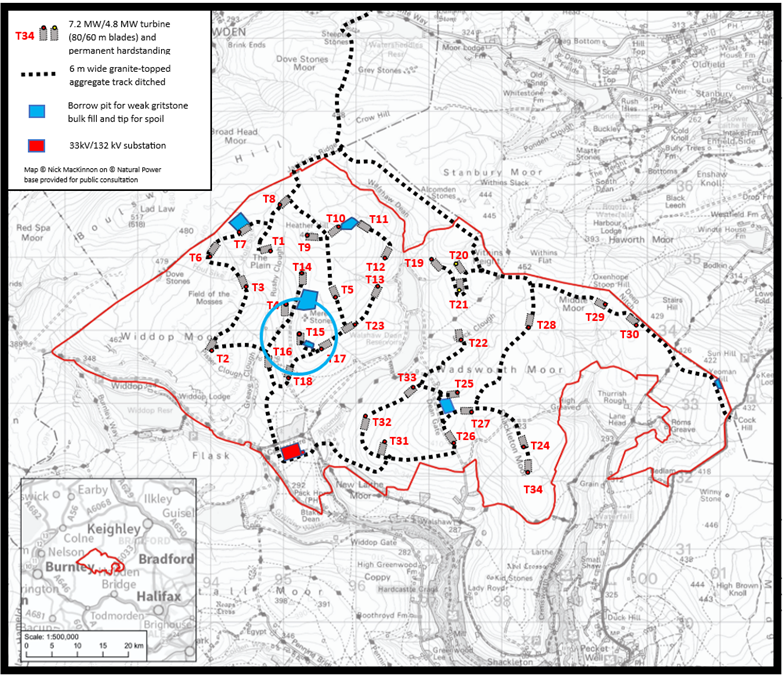
New layout of CEP (240 MW)
Is CEP (240 MW) viable? We shall be unpacking that patiently on the ground in Season 4. Back to the meeting, which has finally got off Slide One to reveal the new layout.
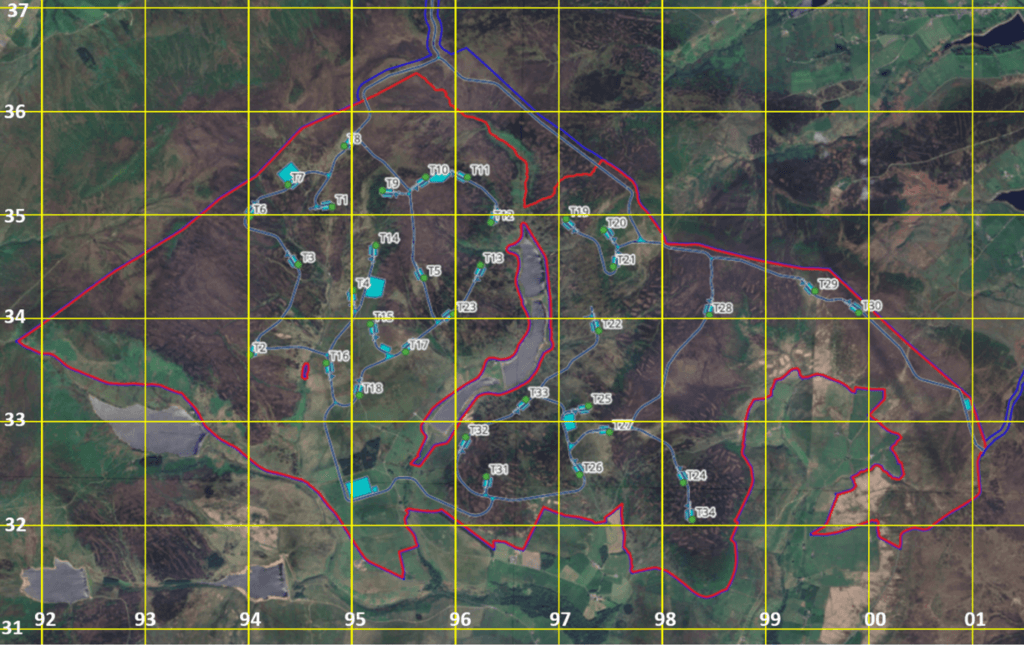
As we have long predicted, the four turbines along the Scout Ridge have gone, and so has the one by Dove Stones. The cluster south of Top Withins has been thinned out as we said it had to be. T22 is still at the bottom of Black Clough but is reached from T33 by a difficult contour track. That one won’t survive the next relaunch, if there is one.
The blue swimming pools are borrow pits (onsite quarries) except for the Olympic facility with diving pool by Sutcliffe Plantation (951 323) which is the 33 kV/132 kV substation, exactly where Ali West said it would be. It looks huge, presumably because this site was going to host the cancelled BESS, the battery that should be smoothing the output. Wind farms should have an hour of onsite storage, or they piddle their energy, incontinently as a dachshund, onto the grid for the bill payers to mop up. We see the first CWF Ltd acknowledgment in over two years of the Greave Clough sluice and tunnel (945 335) that handles a third of their storm runoff. As Zoë said, “It’s almost as though they read your blog!”
The access from the Lancashire Moor Road now goes straight up the hill past the grouse butts as John Page said it would, swapping a relentless 13% climb for Donald Mackay’s dainty S-bends and delicate peat slide traverse that we highlighted in our Scoping Report response published on the Planning Inspectorate website (Section 12 p 384). Donald Mackay has now walked his route with a probe as I did and evidently found the same catastrophic peat slide risk at the end of his Sandy Hill traverse. The day I buried the 3-metre probe on Donald’s traverse on 1 August 2025 was the first legal opportunity to do so after the route was published. They closed their unlawful non-statutory consultation before anyone could check their access track, and yet it runs over Crow Hill, scene of the most famous peat slide in British history.
What Donald Mackay has not done is walk along his Stanbury Bog Expressway (SBE). As boys during the war my father-in-law and his friends would jump on the surface to make it wobble like your granny’s junket. You might float a track here, provided you let the bog eat enough of your stone. Is a floating track floating if it is touching the bottom?
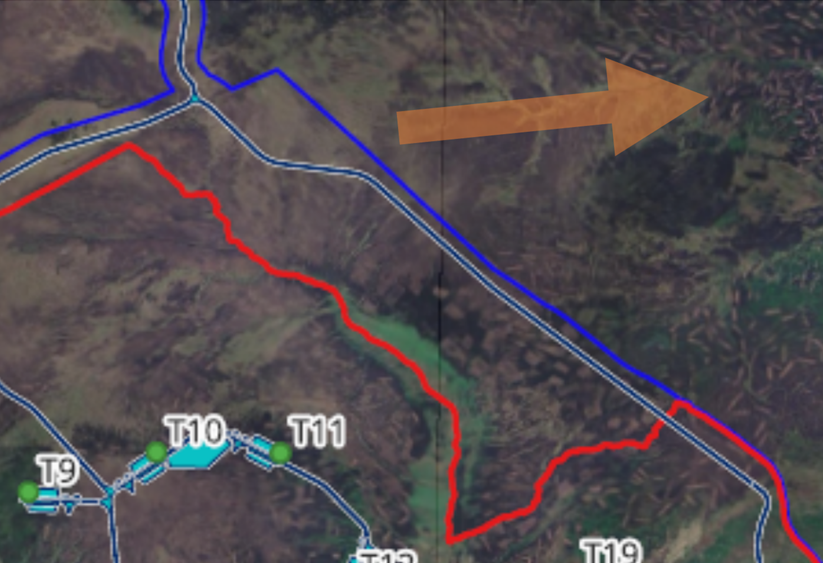
We couldn’t predict the SBE because it runs outside the turbine area. You can judge by the way the heather strips peter out that the SBE crosses forbidding terrain. This is two-hours-per-mile ground on foot and the only bit of Walshaw Moor I’m afraid of, but now it may have to be walked with Teddy the Airedale, who almost drowned on Crow Hill in Season 3. More people have been to the South Pole than have crossed direct from Alcomden Stones to Crow Hill on the route of the Stanbury Bog Expressway.
CEP 240 MW is even more grossly overcrowded than CEP 300 MW
We calculate this new layout has 32 × 7.2 MW turbines and 2 × 4.8 MW turbines crouching behind Top Withins, giving exactly 240 MW of installed power. It’s still not a viable wind farm because it is grossly overcrowded, but once correctly thinned out to 130 MW it would cease to be viable financially, and this is the insoluble problem of Calderdale Energy Park.
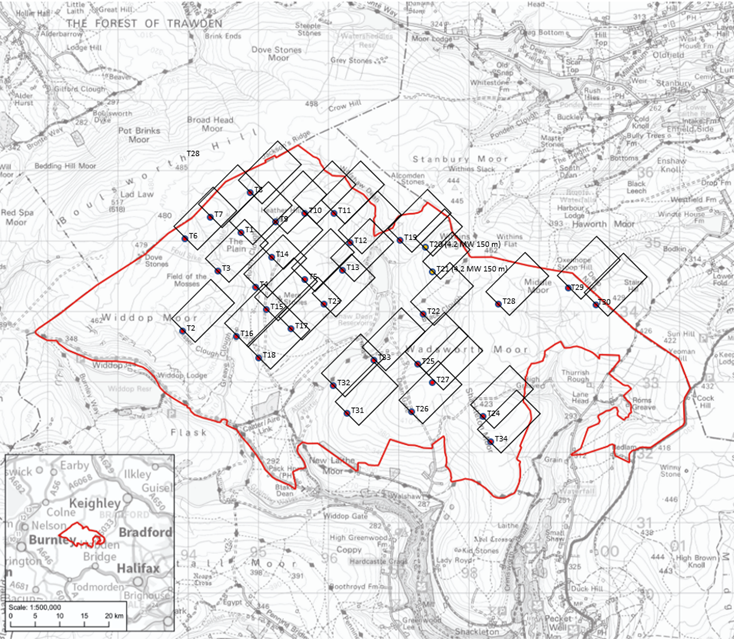
Here is Project Director Christian Egal’s own statement of how you design a wind farm.
“The wind turbines need to be spaced far enough apart to ensure that whatever the wind direction, the energy losses associated with the wind turbines are minimised. The Applicant has applied a minimum separation distance between each of the wind turbines, in general 5 times the rotor diameter (RD) when perpendicular to the predominant wind direction, and 3 times the rotor diameter for other wind directions. This creates an elliptical shape around the wind turbines orientated in the direction of the predominant wind direction. This is to protect turbines from the wake effects caused by other wind turbines in the scheme so that they do not hinder performance.”
And here is Scout Moor, built by reputable developer Peel Cubico.
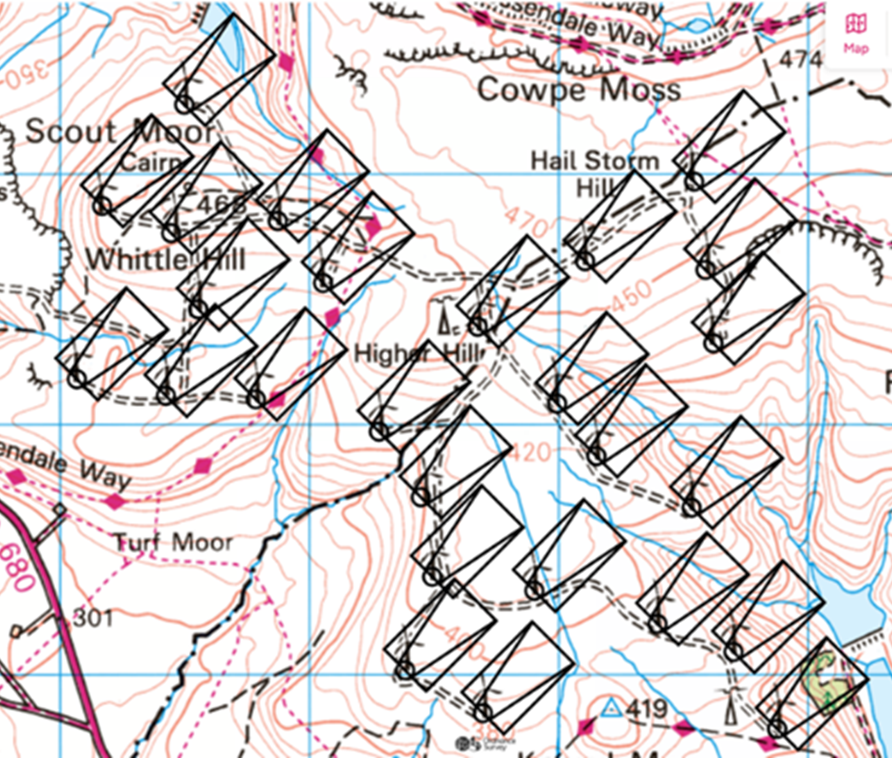
The clincher is that CWF Ltd formerly employed a reputable consultant firm Natural Power and their James Lightbody laid out the first version of Calderdale Wind Farm (CWF) using Vestas 4.8 MW/120 m turbines. Whatever else it was (“worse than useless” says Donald Mackay) CWF was correctly spaced.
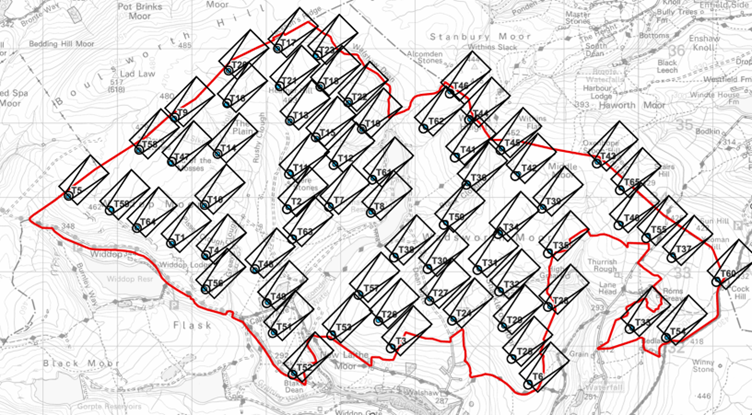
Back in the meeting, Donald Mackay now said something utterly implausible. Jenny Shepherd had guilelessly asked what the peat depth criterion was to move a turbine.
“We have taken out the old T23 and T24 because we found 4-metre-deep peat.”
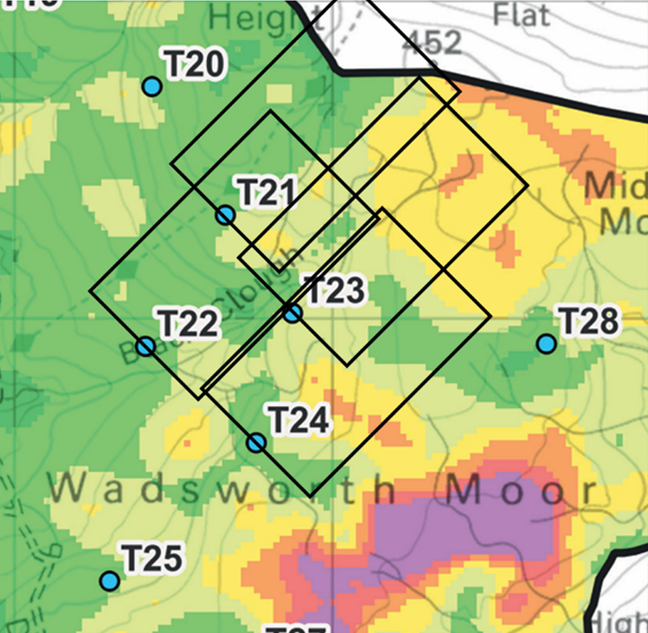
As you see, “4-metre-deep peat” (purple is 3 metres plus) was not the reason T23 and T24 were taken out. It was because they were causing the grossest overcrowding on the site, as the T21-24 cluster; but Donald Mackay can’t mention overcrowding because CEP (240 MW) is even more overcrowded than CEP (300 MW) so he explains the culling of T23 and T24 by non-existent “4-metre-deep peat.” “Don’t mention the overcrowding! I mentioned it once, but I think I got away with it!”
Christopher Wilson sticks two fingers up to the King
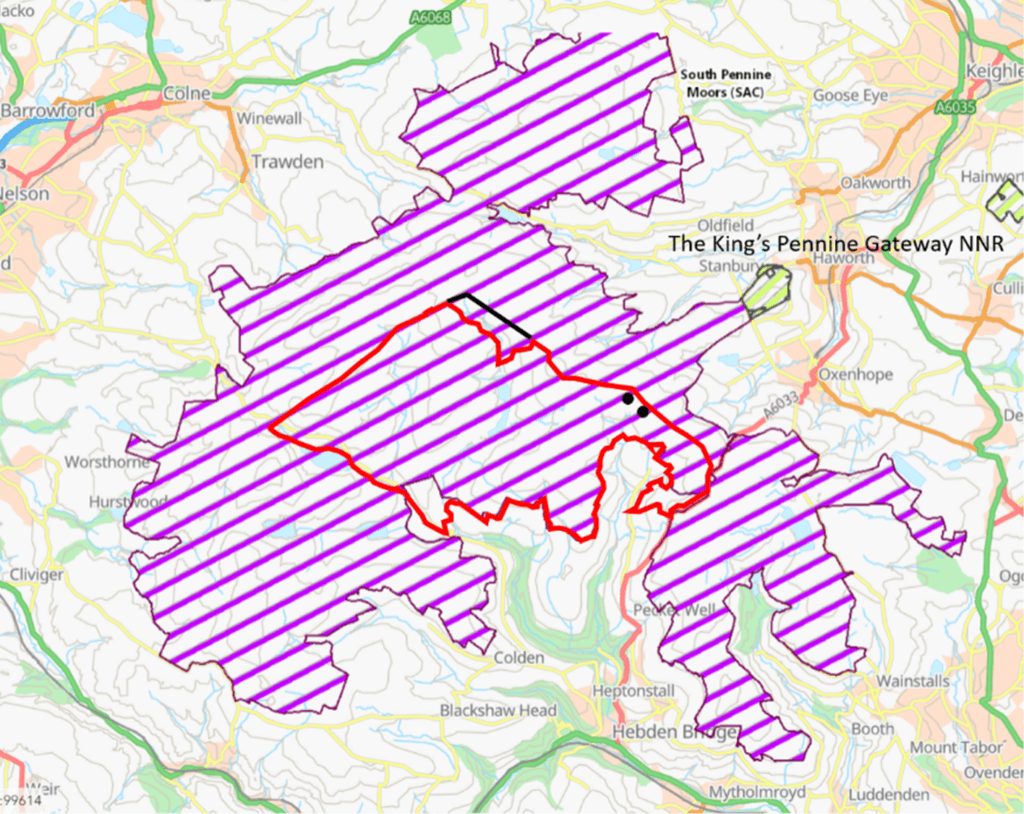
Now we turn to the King’s Pennine Gateway National Nature Reserve on Penistone, analysed in the previous blog and in a WTRG report for the King and his advisor Tony Juniper and Natural England.
“The Bradford Pennine Gateway National Nature […] forms part of the King’s Series, a national initiative to protect and celebrate the natural heritage of the United Kingdom, and Natural England’s commitment to enhancing biodiversity and access to nature for communities.”
I would have been proud to have written this elegant hammer blow to CEP but, blissfully, it is all the work of Roger the Robot.
T29 and T30 are all that is left on the Brontë skyline above the King’s Gateway, and they are toast. They are only there to keep the investors onside a bit longer in the hope that something turns up, but the strategy is misguided, because T29 and T30 stick two fingers up to the King and his Pennine Gateway to nature.
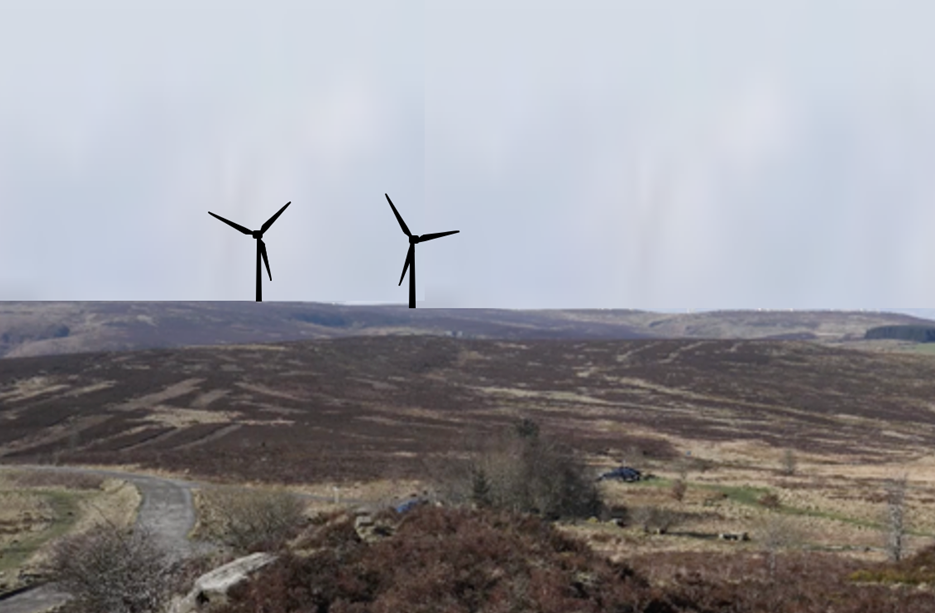
Gangrene at T28, T29 and T30
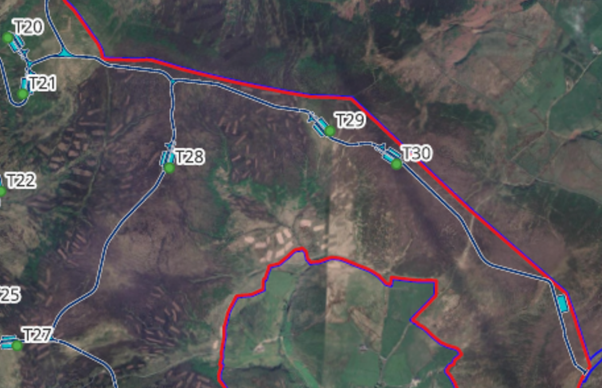
The track system would be 30% shorter were T28, on the luxurious deep peat of the Wadsworth Plateau, T29 and T30 taken out. Peat scientists, the curlews of Stairs Swamp, the residents on the stone routes, Emily Brontë, His Majesty the King and the poor bloody electricity bill payer who pays for all that track, unite on this: T28, T29 and T30 are toast. The power ticks down to 218 MW and we haven’t started on the overcrowding yet.
A reason for the track beyond T30 to the Elephant on Cock Hill and the A6033 was given by Donald ‘Transparent’ Mackay. Because he has belatedly discovered that the A6033 at Hebden Bridge is hopeless for the aggregate convoys, all the stone is now going along the Lancashire Moor Road, which will be upgraded to allow two-way working by 25-tonne-loads. In the Scoping Report this road was only going to get the minor and temporary work required for the turbine component deliveries, remarkably little being required as we showed in our swept path analysis. The blade delivery is glamorous, but because they can travel flat, they can pass Colne and Trawden at night. Now Colne has all the dreary granite as well and that’s a quite different matter: thousands of heavy lorries, 9-5 every day except weekends and bank holidays. To make the traffic plan look better to the people in Lancashire, some HGV loads will come through Halifax along an upgraded Cold Edge past Ovenden Moor WF to the A6033. This might be “a lorry carrying a cable drum, for example.” The turbine components could have come that way too, but the blades would have been raised by sixty degrees at several pinch points, causing immense disruption by day.
Reducing the stone pain for Colne and Trawden
The easiest way to reduce the roadstone pain for the poor people of Trawden and Colne is to take out isolated T28, T29 and T30 and all the green track, hugely reducing the stone requirement and some long internal 33 kV cable runs back to the substation at Sutcliffe Plantation. CWF Ltd have acknowledged by their actions that they have a huge Wuthering Heights problem, but they have made it worse (see Wuthering Heights Cluster). T20 and T21 are only 4.8 MW each and will have to be culled. T19 then drops off by gangrene. If we then cull the now superfluous Stanbury Bog Expressway we have cut the track length by 30% for the cost of 38 MW. Those 38 MW are responsible for about 30-40% of the roadstone pain in Trawden and Colne (floating tracks are not made of any onsite bulk fill) and this is disproportionate, as shown in the diagram below.
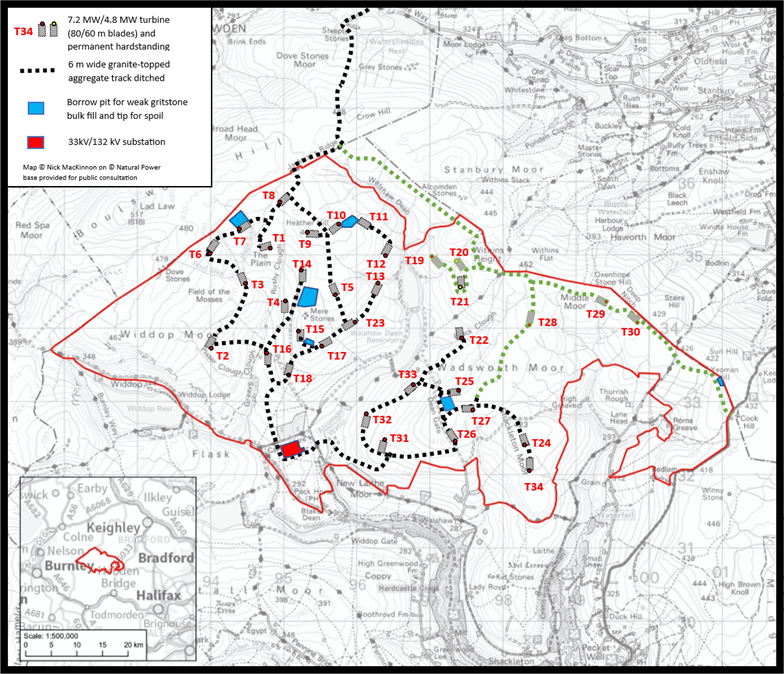
The electricity bill-payer, the people of Trawden, the UNESCO candidature of the Brontë Moors, the curlews on Cock Hill Swamp, the irreplaceable habitats, and His Majesty the King are being bullied for the last 38 MW, and it won’t happen.
The remainder now must be thinned out to a maximum of 130 MW, and when that is done, proper discussions about the international designations and the world-renown of Walshaw Moor can finally begin.
The River Kelvin error is AI slop
Back at the meeting, Ashley Robinson is taking us through the vegetation surveys. Jenny Shepherd is in her element. When Ashley says the surveys will soon be complete, she observes that they cannot be, because they were negligible in the Scoping Report and you need to see a whole year of plant succession. I take the opportunity to raise the vegetation survey on the River Kelvin, which runs like the heart of darkness through the Scoping Report, and was found by John Page, fifteen minutes after he started reading.
7.4.19 Eleven watercourses were identified within the Turbine Area as requiring River Condition Assessment surveys to inform Biodiversity Net Gain assessments and options for habitat enhancement. Observations were recorded at 142 locations across the Turbine Area. The water courses were largely natural in character with no dominant or subdominant artificial ground cover on either bank at 98 survey locations. 7.4.20 However, non-native and invasive species were recorded, including Himalayan balsam at six survey locations (five on the River Kelvin and one on the Water of Feugh). Rhododendron was also recorded at two locations along the Black Dean. Artificial reinforcement of the watercourses was recorded at 20 locations and included use of brick/ stone, gabions and culverting.
As we know, the River Kelvin is in Glasgow, and the Water of Feugh rises in the Grampians. Black Dean has yet to be found, but Dean Black was a grime artist whose record label was Dank of England. This AI slop scraped off some work done at Stirling University has been slipped in by Roger the Robot to cover his failure to do the vegetation surveys.
I ask Ashley Richardson how much more AI slop is present in his Scoping Report.
“There is no AI in the Scoping Report.”
“What about the River Kelvin?”
“The River Kelvin was not AI slop because there is no AI in the Scoping Report.”
“So, a human being went through all those road numbers making them wrong?”
Ashley was clearly feeling the weight of the albatross he must wear because he didn’t proofread the Scoping Report. Stronger Together found most of the big errors in a day, and the River Kelvin is obvious as the kookaburra in one’s budgie smugglers, as Charlotte Brontë once put it.
“There is no AI in the Scoping Report!”
Donald Mackay intervened now, because his colleague was about to spit the dummy, as they say in Slack, so I have written to Ashley to remind him that he has no idea how much AI there is in his Scoping Report because his job was not to write it, but to read it, which he signally failed to do. Roger the Robot wrote it, and Logika have never denied our repeated assertions that it is riddled with his AI hallucinations.
Because they respect the clients, including Strutt & Parker, Logika didn’t ask Roger the Robot to write their Dengie Marsh WF Scoping Report, published in May 2025. All you need do to compare Logika’s attitudes to Christopher Wilson and Strut & Parker is to look at the maps they made for the two clients. Then note that the CEP report is unsigned and all the Logika consultant names have been redacted by Roger, who wanted full credit and has now got it. Dengie Marsh is proudly authored by three real people, and all the human consultants have given their full names too.
Why did Logika palm Christopher 440 Kelvin-Volts Wilson off with Roger the Robot? The clue may be in their names.
Borrow pits
Borrow pits are onsite quarries for crushed rock. In Scotland and Wales, a whole wind farm can be built out of the onsite rock. In West Yorkshire, as has long been known, the rock when crushed is too weak and porous, and susceptible to frost, to make roadstone or concrete. The waste from quarrying high-quality blocks in West Yorkshire is sold as “bulk fill” where no strength is required, in a French drain, for example. These facts are printed on the notes to British Geological Survey Huddersfield Sheet 77, yet no consultant had looked at this map until I showed it to them at a public consultation on 17 May 2025. Then Alison Sidgwick said airily, “We don’t look at geology maps at this stage.” That may be so, but somebody certainly looked at BGS Sheet 77 presto pronto, because on 21 May 2025, Donald ‘Transparent’ Mackay finally admitted on film (when I asked him, via Kevin Whitmore) that the onsite rock “is not the best for construction.”
The councillors now had a go at the borrow pits. “You will have to blast the rock to get it out of those borrow pits.” With the frank insouciance that makes him so likeable, Donald Mackay replied, “I shall be delighted if there is stuff down there I can blast. That’s the easiest way to get it out.”
I observed that what would come out of the borrow pits was what Donald Mackay calls “bulk fill” but we in West Yorkshire call “quarry waste”. I ask Ashley if he had done his traffic analysis with two models: borrow pits allowed and borrow pits banned because Walshaw Moor is an SAC, protected under international law and part of the 30 by 30 target. I don’t know if anyone has ever dynamited a Special Area of Conservation but there’s a first time for everything except incest and folk dancing.
“The Development Consent Order will have borrow pits.”
“But what if Natural England say that Donald can’t dynamite an SAC?”
“There will be borrow pits!”
“So, is it borrow pits or bust?”
“No! No!! No!!! It’s just that there will be borrow pits.”
“But if you insist on borrow pits and Natural England advise the quarry waste lying around West Yorkshire instead, and you refuse, then you lose your proposal on borrow pits, and that’s what ‘borrow pits or bust’ means.”
“There will be borrow pits in the DCO!!!”
Donald Mackay told me at Trawden he was “a pretty transparent guy” and he came to his colleague’s rescue again with the unspeakable truth.
“We need to dig out the borrow pits because we must have somewhere to put all the spoil and peat we’ve excavated.”
So, you have an internationally designated SAC and you blast holes in it to make a quarry waste that is widely available in vast piles all round your wind farm, and the reason you do this is because you need somewhere to dump all your own waste and ruined peat, of which there will be thousands of tonnes because you are terracing the tracks and turbine foundations on steep slopes. Peat has an intricate structure evolved in situ over millennia and that will not survive being tipped onto a borrow pit full of spoil. Once dug up, peat is wet carbon, waiting to dry and oxidise to CO2 on a well-drained spoil tip.
Sod Cluster
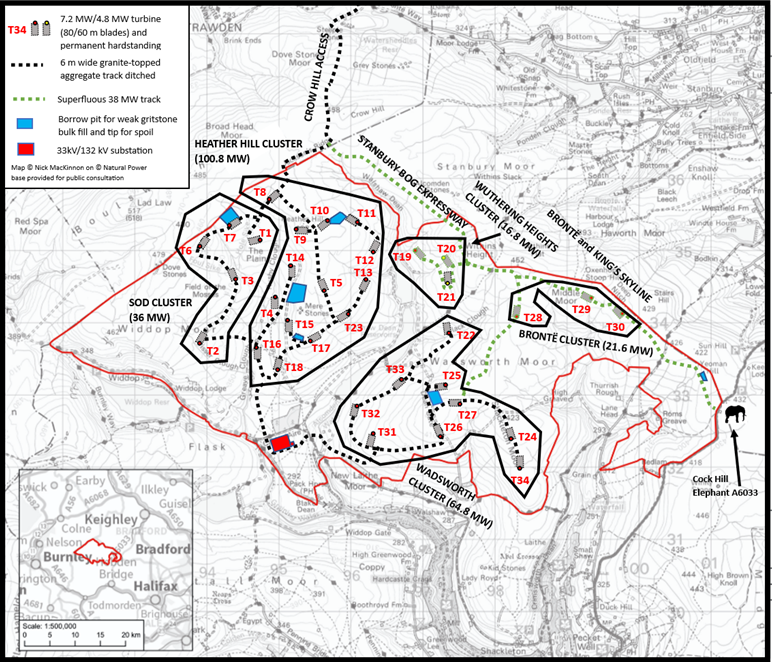
T1, T2, T3, T6 and T7 form a cluster on the steep funnel of the Greave Clough catchment on the aptly named Sod. The diagonally sloping track below the Field of the Mosses is unsafe and would be Level 6 in the route hierarchy: AVOID WHEREVER POSSIBLE. This track crosses ground (Cross Dike and Waterfall Syke) already identified by the Scoping Report as liable to surface flooding. T6-T7 and T7-T8 cross deep cloughs (Upper Greave and Hole Sike). It was precisely this line that I discussed with Donald Mackay at Trawden. I traced it on the map, asked if a track could go that way, and he shuddered and said, “No. No. We don’t go sideways there.” A much fuller analysis using the hierarchy is given under Sod Cluster in our formal response.
In the cloughs, Donald Mackay and Albatross Robinson will want to lay a pipe for the storm flow and build an aggregate embankment on top. The Environment Agency should insist on proper bridges with increased clearance to allow for future increased flood risk. The shape of the terrain in Sod Cluster makes bridges very difficult. As we left the meeting Donald and Ashley were joshing each other about how hard they have worked since the Scoping Report was shredded. “And tomorrow we have the meeting at the EA about the watercourses!”
The brutal logic on Walshaw Moor
The last 38 MW is not needed to build the remaining 202 MW but requires 30-40% of the imported roadstone. The stone pain in Colne and Trawden can be hugely reduced by culling these very controversial turbines.
On the narrowest understanding of the King’s Gateway and the immortal literary landscape of Brontë Country (for which a UNESCO listing application in the present ten-year cycle 2022-2033 has been started) the Wuthering Heights and Brontë Clusters and the green track that serves them will be culled anyway. A full understanding of these aspects, which will be possible once a proper wind farm has been proposed, would cull CEP.
The remaining 202 MW is the grossly overcrowded Heather Hill and Sod Clusters and Wadsworth Cluster, which would not be overcrowded if it were adjusted. Sod Cluster (35 MW) is unsafe and grossly overcrowded; it remains unsafe even when correctly spaced.
What remains is the 130 MW shown below. This can only be connected to Bradford West substation because Rochdale (cost £30 million) and “Leeds North” (£50 million), which CWF Ltd. has registered with NESO, are much too far: the connection cost should be less than 10% of the total budget (which would be £150 million or so for 130 MW). The 132 kV cable dig does not need a high-spec track, and a possible route on existing track is shown, only to show that the Brontë Skyline track is not required even to connect to the cable corridor to Bradford West on the A6033. They don’t have Bradford West, but it is their only hope.
Nobody, from His Majesty the King to Christopher ‘440 Kelvin-Volts’ Wilson, would support this 130 MW wind farm, and I have informed the investors that the likely maximum is now 130 MW, by way of Fozia Gulzar, the CWF Ltd auditor.
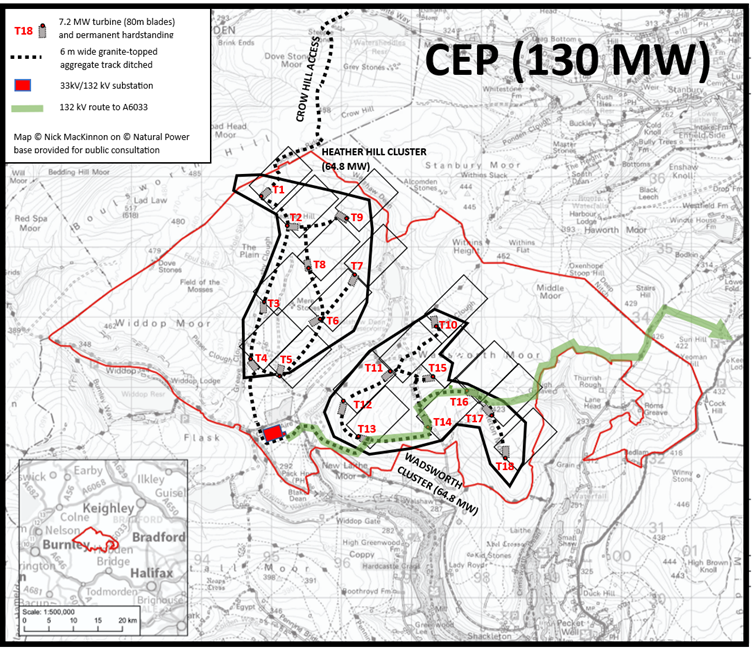
The statutory consultees are being asked to comment on a financially hopeless, destructive, dangerous, overcrowded wind farm on an SPA, an SAC, and the greatest literary landscape in the English language. Discussion of those complex matters can only begin when a properly designed wind farm proposal is put forward. The consultation process (Non-statutory Consultation, competent Scoping Report, perhaps by reputable and experienced Natural Power this time, should they want to lend their name) should then begin again.
Because the proposal is properly designed, the process will run more smoothly. Ignorant people, some in government, may say, “Newts are holding up CEP” but the delays are wholly due to breathtaking and comical CWF Ltd and Logika incompetence on an unsuitable site that a competent developer would not have chosen.
A quick walk to T15 Mere Stones
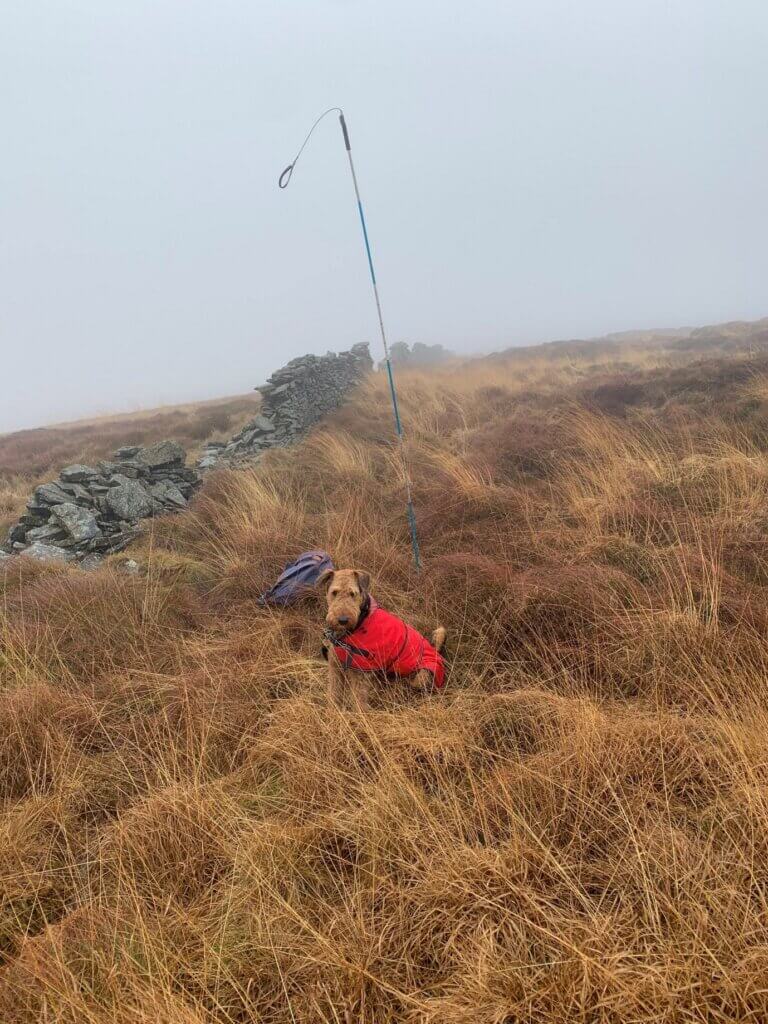
The weather has been wet and dull for weeks. When no more delay was possible, and before I could extract even 4-figure grid references from the useless CEP map, the dog and I did a quick run in thick fog to T15 Mere Stones, the Anglo-Saxon mære stanes, boundary stones, marking a boundary to Greave Pasture (græfe læs) that predates the Conquest. The Normans crushed Yorkshire and left it as Domesday waste. William repented his deeds on the evening of his death. “I attacked the English of the northern shires like a lion. I ordered their houses and corn, with all their belongings, to be burnt without exception and large herds of cattle and beasts of burden to be destroyed wherever they were found. It was there I took revenge on masses of people by subjecting them to a cruel famine; and by doing so, I became the murderer of many thousands of that fine race.”
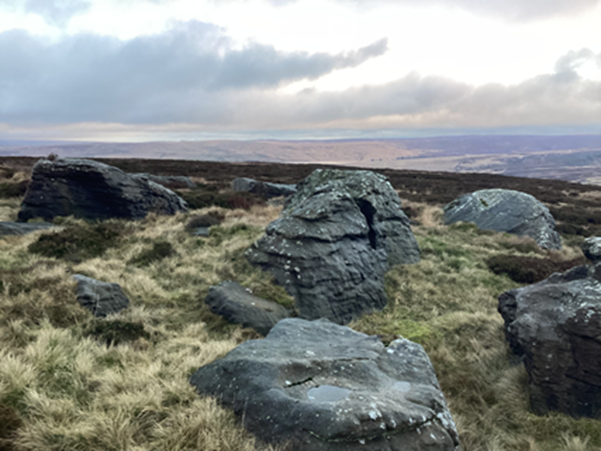
They appear eerily through the fog, patiently marking the top of graefe laes for more than a thousand years, but now betraying the rock that Christopher Wilson would blast and crush so he can fill the waste pits with his spoil, hiding his deeds under doomed peat.
++++++++++++++++++++++++++++++++++++++++++++++++
This is the 53rd in a series of guest blogs originally based on the 65 wind turbines which Richard Bannister planned to have erected on Walshaw Moor.
The developers canned their original 65 wind turbines, quite possibly in response to the public humiliation of having their so-called ‘plan’ publicly shown to be damaging, irrational and probably unlawful. They came back with a plan for 42 wind turbines and the amazing Nick MacKinnon and friends ridiculed that so-called plan. Now the developers have brought forward a 34-turbine revision for which this blog post is the first commentary. The series continues, probably from now on at 3-weekly intervals and aiming for Monday publications when possible.
To see all the blogs – click here.
[registration_form]
“or they piddle their energy, incontinently as a dachshund”
I have been in contact with the DADL (daschund anti-defamation league) and they now strongly contest this statement. It is known that over-excitable (adult) border collies, miniature schnauzers and staffordshire terriers are also prone to the same or similar condition. The sample density is not sufficient to generalise as to whether it is widespread within each breed or even to determine any biase between the sexes of dogs (in the generic non-sexual nomenclature).
(The above are personal observations gathered over my lifetime that I have shared with DADL. I cannot personally comment on any urinary ailments that airedale terriers may or may not exhibit. However, AI suggests “Airedale Terriers can experience urinary incontinence.” and a websearch indicates it may not only be AI with this opinion.)
All the above is offered in a light-hearted manner.