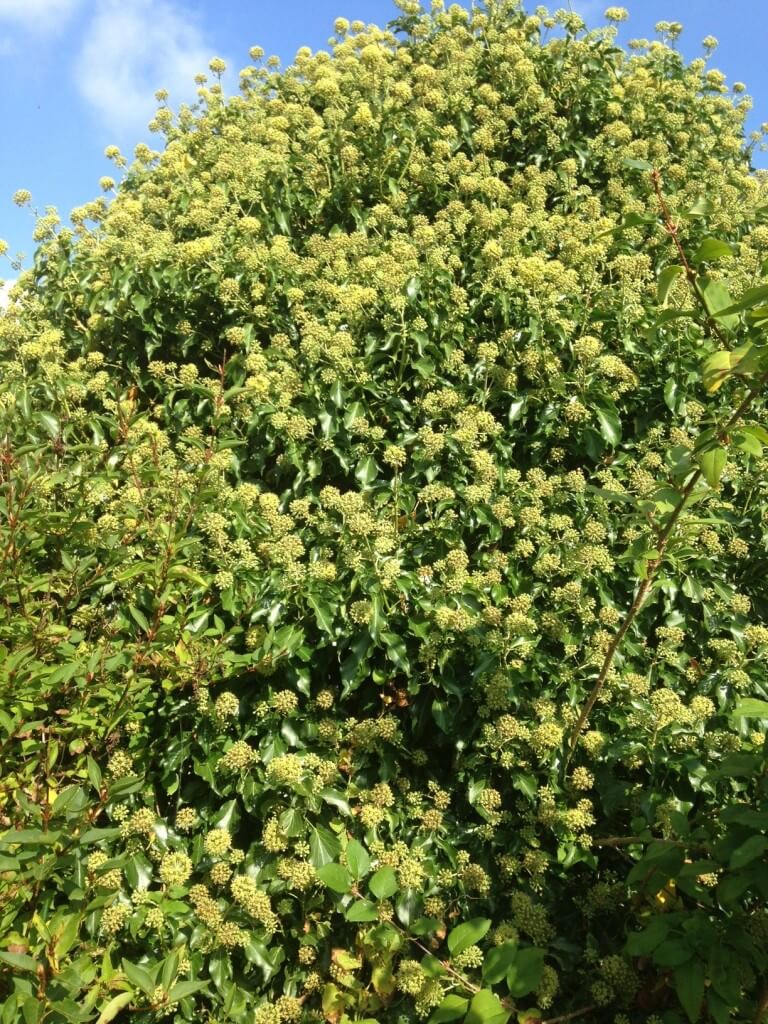
The ivy in the garden is looking good and buzzing with Ivy Bees.
And there have been up to seven splendid Red Admirals on it in the past few days.
[registration_form]
7 Replies to “September ivy”
A fantastic habitat providing food for insects and birds and shelter during the winter months. And yet the scorn directed at this plant by a good many always amazes me.
Yes, a very underrated plant. Fortunately it grows widely in spite of the antipathy directed at it from some quarters.
ours is the same, absolutely loads of red admirals, ivy bees and different kinds of hoverflies. We’ve spotted a number of wasps, as yet unidentified, that are preying on bluebottle flies in the main. They lie flat against a leaf in the shadows of the ivy and then ambush unsuspecting flies feeding on the ivy nectar. Lots of spiders also using the ivy to trap insects. Just goes to show what a fantastic resource this is for insect life at this time of year.
Lovely photo, Mark.
I agree with all this – ivy is wonderful.
Ours is also feeding many (unknown to me) beasties – but I do recognise the beautiful Comma butterflies on it today, in the sun.
Good old ivy flowers, you can rely on them for a lovely buzz at this time of year. But the rope-like stems are fickle. Yes, they can take a fair amount of downward force but pulling on them at right angles can deliver a terrible buzz.
Good old ivy flowers, you can rely on them for a lovely buzz at this time of year. But ivy’s rope-like stems are fickle. Yes, they can take a fair amount of downward force but pulling on them at right angles can deliver a terrible buzz.
And as the ivy goes over (or even before) try putting some rotting banana or plumbs out. Red admirals and commas love the fermenting juices and stay ‘plugged in’ even on close inspection.
We counted 38 red admirals up our lane and in our garden a week last Sunday. They were feeding on ivy, hemp agrimony and michaelmas daisies. Several vis miggers (visible (bird) migration watchers) on the trektellen website have reported red admirals flying south from various hill top vantage points and that may account for the marked drop in numbers recently while others may have followed the peacocks into hibernation.
Ps. Ivy bees haven’t reached us yet…..
Comments are closed.
This website uses cookies to improve your experience. We'll assume you're ok with this, but you can opt-out if you wish.AcceptRejectRead More
Privacy & Cookies Policy
Privacy Overview
This website uses cookies to improve your experience while you navigate through the website. Out of these, the cookies that are categorized as necessary are stored on your browser as they are essential for the working of basic functionalities of the website. We also use third-party cookies that help us analyze and understand how you use this website. These cookies will be stored in your browser only with your consent. You also have the option to opt-out of these cookies. But opting out of some of these cookies may affect your browsing experience.
Necessary cookies are absolutely essential for the website to function properly. This category only includes cookies that ensures basic functionalities and security features of the website. These cookies do not store any personal information.
Any cookies that may not be particularly necessary for the website to function and is used specifically to collect user personal data via analytics, ads, other embedded contents are termed as non-necessary cookies. It is mandatory to procure user consent prior to running these cookies on your website.
A fantastic habitat providing food for insects and birds and shelter during the winter months. And yet the scorn directed at this plant by a good many always amazes me.
Yes, a very underrated plant. Fortunately it grows widely in spite of the antipathy directed at it from some quarters.
ours is the same, absolutely loads of red admirals, ivy bees and different kinds of hoverflies. We’ve spotted a number of wasps, as yet unidentified, that are preying on bluebottle flies in the main. They lie flat against a leaf in the shadows of the ivy and then ambush unsuspecting flies feeding on the ivy nectar. Lots of spiders also using the ivy to trap insects. Just goes to show what a fantastic resource this is for insect life at this time of year.
Lovely photo, Mark.
I agree with all this – ivy is wonderful.
Ours is also feeding many (unknown to me) beasties – but I do recognise the beautiful Comma butterflies on it today, in the sun.
Good old ivy flowers, you can rely on them for a lovely buzz at this time of year. But the rope-like stems are fickle. Yes, they can take a fair amount of downward force but pulling on them at right angles can deliver a terrible buzz.
Good old ivy flowers, you can rely on them for a lovely buzz at this time of year. But ivy’s rope-like stems are fickle. Yes, they can take a fair amount of downward force but pulling on them at right angles can deliver a terrible buzz.
And as the ivy goes over (or even before) try putting some rotting banana or plumbs out. Red admirals and commas love the fermenting juices and stay ‘plugged in’ even on close inspection.
We counted 38 red admirals up our lane and in our garden a week last Sunday. They were feeding on ivy, hemp agrimony and michaelmas daisies. Several vis miggers (visible (bird) migration watchers) on the trektellen website have reported red admirals flying south from various hill top vantage points and that may account for the marked drop in numbers recently while others may have followed the peacocks into hibernation.
Ps. Ivy bees haven’t reached us yet…..